← Back to TCM Global · All articles
2026-10-22
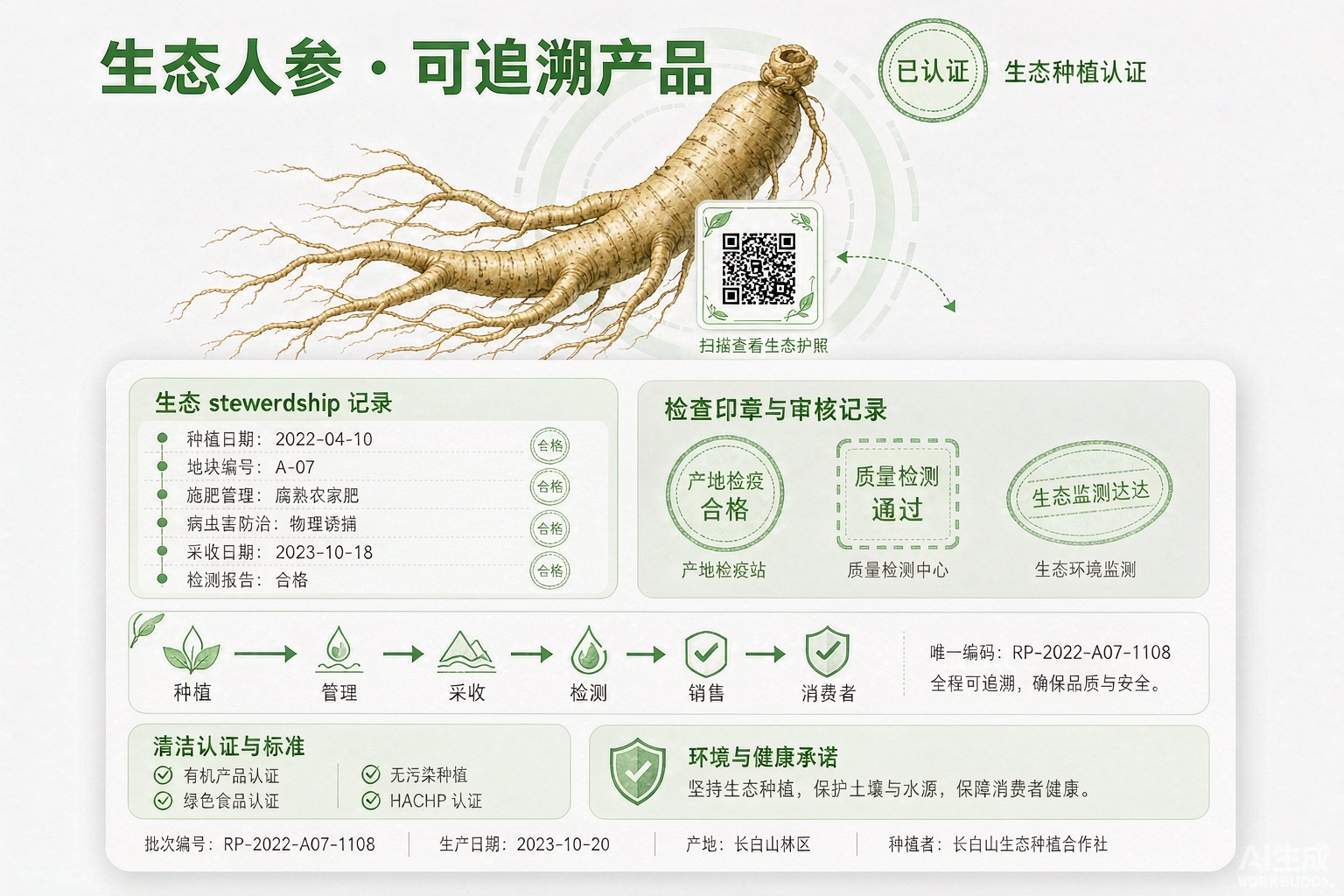
Ginseng's pricing ladder — garden to forest to wild — only works if buyers trust the labels. Jilin's answer is a three-part system the province describes as "yishen yima" (one code per root) traceability plus ecological stewardship plus multi-batch inspection.
Every certified product carries a code linking back to:
Scan it, and the root's biography appears.
Ecological management rules govern how each cultivation category is grown — canopy density for forest ginseng, chemical-use limits for garden plots, seasonal harvesting windows for wild populations. Environment protection and quality protection are the same system.
The province runs multi-batch quality sampling: government inspectors pull random lots for lab testing of pesticide residues, ginsenoside content and heavy metals. Results feed back into licensing — fail, and your GI authorization is at risk.
Markets like the EU, Japan and Korea increasingly demand documented chains for botanical imports. A provincial system that already generates batch-linked lab data shortens compliance dramatically.
Authenticity claims become defensible. "Six-year forest ginseng" backed by a decodable code survives due diligence that would sink verbal assurances.
The QR code era has trained shoppers to check provenance. Ginseng finally speaks that language.
Traceability is no longer a nice-to-have in the ginseng trade — it is becoming the admission ticket. Jilin's system is the most complete implementation we've covered, and it sets the bar competitors must now clear.
Explore more Eastern wellness wisdom at TCM Global.