← Back to TCM Global · All articles
2026-10-20
For centuries, ginseng has held a place of honor in Eastern wellness traditions — a root associated with clarity, vitality, and steady energy. Today, modern research is looking at one of its most studied compounds, ginsenoside Rg3, through a new lens: as a possible vehicle for delivering medicines from the nose to the brain.
This is early-stage science, not a wellness routine. But it is a fascinating example of how traditional botanicals continue to inspire contemporary inquiry — and it invites a calm, grounded conversation about how we care for our minds over time.
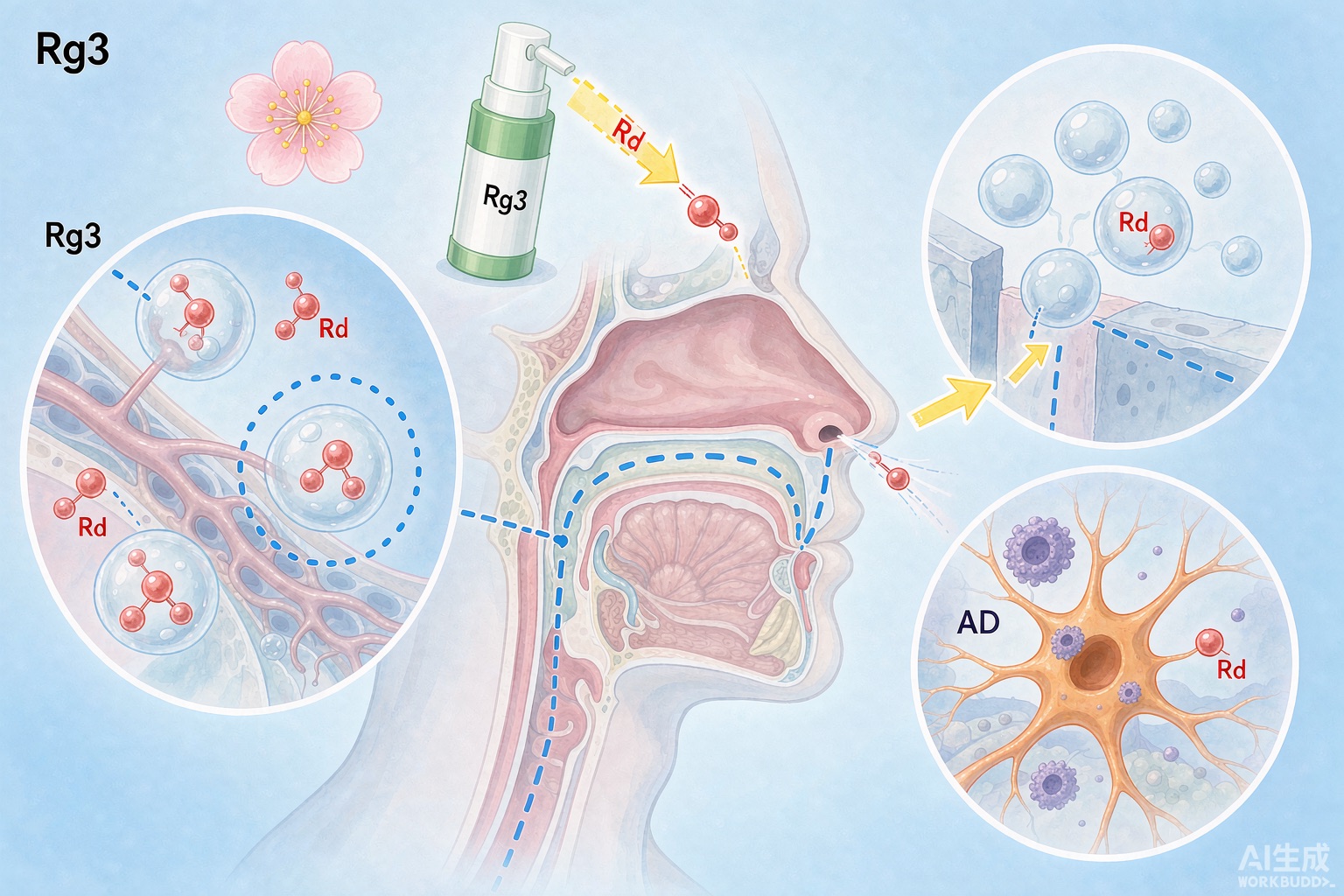
Ginsenoside Rg3 is a bioactive compound found in ginseng, particularly in processed or aged preparations. In laboratory settings, researchers have observed that certain ginsenosides can self-assemble into tiny, bubble-like structures called vesicles when placed in water-based solutions.
These vesicles are essentially natural nanoscale carriers — small, hollow spheres with a lipid-like membrane. Because they form from the botanical compound itself, they are being studied as a potential platform for encapsulating and transporting therapeutic molecules.
What makes them interesting to researchers is their size and composition. Nano-scale carriers can, in theory, move through biological barriers more gracefully than larger particles. That possibility is what connects this botanical curiosity to one of the hardest problems in medicine: reaching the brain.
The brain is protected by the blood-brain barrier, a highly selective filter that shields it from many substances in the bloodstream — including, unfortunately, many medications. For conditions like Alzheimer's disease, this barrier remains a major obstacle for drug development.
The nasal route offers an intriguing alternative. The olfactory region at the top of the nasal cavity sits close to the brain and is connected by nerve pathways. Molecules delivered intranasally may, under certain conditions, travel along these pathways rather than relying solely on the bloodstream. This is often described as a direct nasal-to-brain delivery pathway.
It is not a simple shortcut. The nasal environment is small, dynamic, and quickly clears foreign material. That is where carriers like vesicles come in: they may help protect a drug molecule long enough to be absorbed and transported. In this context, ginsenoside Rg3 vesicles are being explored as a potential delivery vehicle for Alzheimer's-related drugs — an idea still firmly in the realm of laboratory and preclinical research.
It is important to be clear: this is experimental work, largely at the cell and animal-study stage. Researchers have investigated whether Rg3-based vesicles can encapsulate drug compounds, whether they remain stable, and whether they improve delivery to brain tissue compared with free drug solutions.
Emerging findings are promising enough to warrant further study, but they do not yet translate into clinical recommendations. There is no established protocol for nasal Rg3 delivery in humans, and no wellness product should be positioned as an Alzheimer's treatment.
What this research does offer is a reminder of something the Eastern tradition has long understood: the value of a botanical is not limited to one use. A root valued for everyday vitality can also inspire entirely new fields of scientific investigation. That is the spirit of thoughtful, integrative wellness — respect for tradition, paired with honest curiosity about evidence.
While the science on Rg3 vesicles develops, there is real value in the everyday practices that support cognitive wellness:
TCM Global is dedicated to sharing credible, carefully framed information about traditional botanicals and the science around them. We believe the most premium approach to wellness is also the most honest one: honoring tradition, following the evidence, and avoiding overstatement.
Ginsenoside Rg3 vesicles and nasal-to-brain delivery represent one small thread in a much larger story about Alzheimer's research. It is a story that will unfold over years, not weeks. For now, the takeaway is quiet and appropriate: traditional botanicals continue to earn serious scientific attention, and the mind is worth caring for with patience, intention, and evidence-informed choices.
*This article is for general wellness information and does not constitute medical advice. It is not intended to diagnose, treat, or prevent any disease. Consult a qualified healthcare professional about any health concerns.*
Explore more Eastern wellness wisdom at TCM Global.