← Back to TCM Global · All articles
2026-10-19
For centuries, the most treasured roots in Eastern wellness traditions were valued not for their abundance, but for their rarity. Among the many compounds found in ginseng, a small family known as rare ginsenosides has long captured the attention of researchers and traditional practitioners alike. Now, a quiet advance in green biotechnology is reshaping how these compounds are made—bringing what was once extraordinarily scarce within reach at a fraction of the cost, and at remarkable purity.
Ginseng contains dozens of ginsenosides, but the ones most often discussed in modern wellness literature are the "minor" or rare varieties—compounds such as Rg3, Rh2, and certain CK-type metabolites. In raw, mature ginseng, these appear only in trace amounts. Nature prefers the major ginsenosides; the rare ones are the exception.
Traditionally, this scarcity meant that accessing rare ginsenosides required either enormous quantities of aged root or complex, energy-intensive conversion processes. The result was a compound that was difficult to source, costly to produce, and often inconsistent from batch to batch—an uneasy fit for a wellness category built on trust and quality.
Recent developments in biotransformation and green manufacturing are changing this equation. Rather than relying on brute-force extraction or harsh chemical conversion, newer methods use precisely guided enzymatic and fermentation-based processes to transform abundant ginsenosides into their rare counterparts.
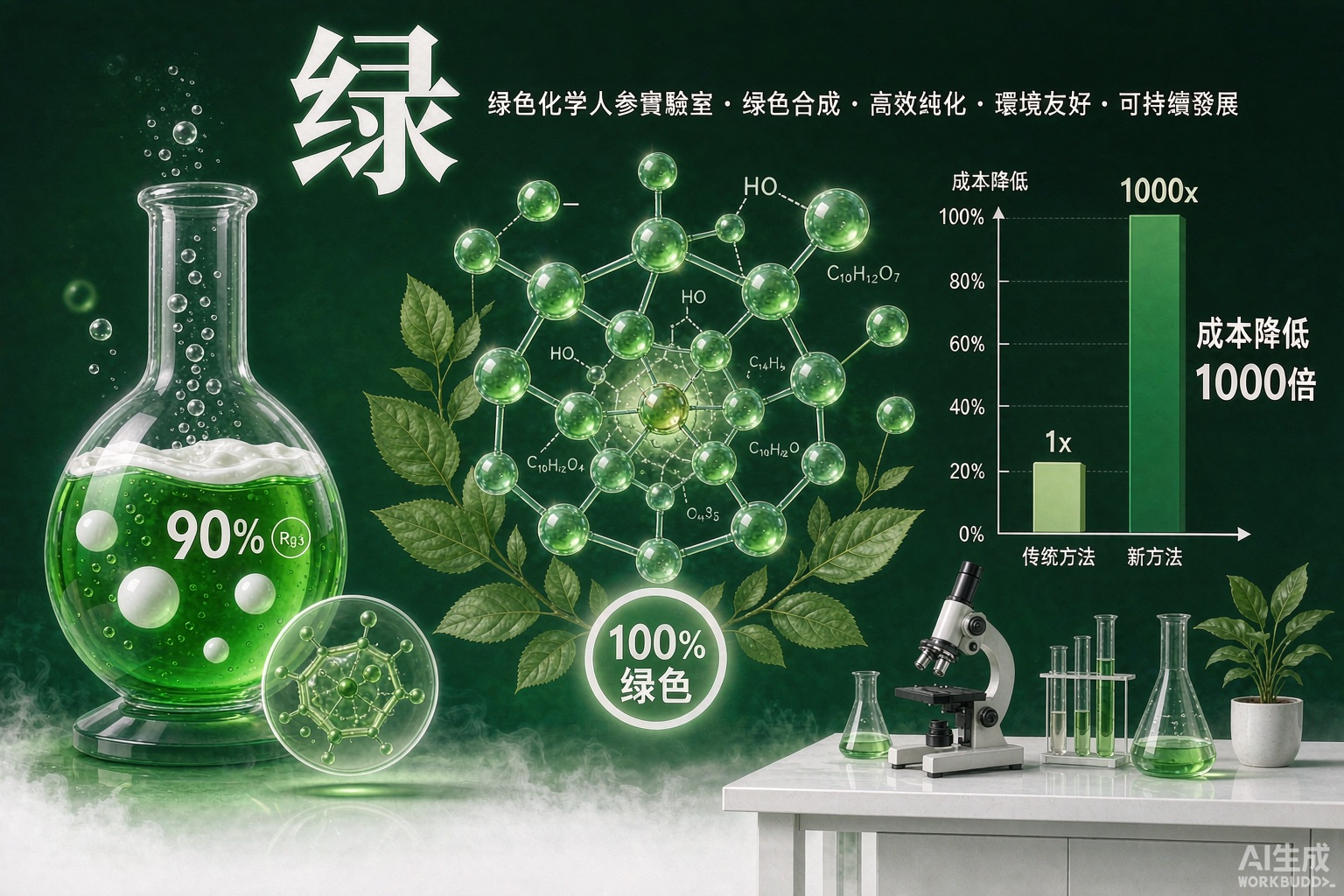
The headline figures are striking. According to recent reporting on the field, these approaches can yield rare ginsenosides at roughly 1/1000 of the conventional cost while achieving purity levels of around 90 percent. For an industry accustomed to scarcity and premium pricing, this represents a genuine shift—one that moves rare ginsenosides from the realm of the exceptional toward the accessible.
Equally important is the "green" dimension. These processes tend to use milder conditions, fewer harsh solvents, and more sustainable inputs, aligning with a broader movement in wellness manufacturing toward cleaner, more responsible production.
In wellness, purity and affordability are not opposing goals—they reinforce each other. A consistent 90 percent purity standard means formulators can work with a reliable, well-characterized ingredient rather than compensating for variability. And lower production costs translate into products that more people can incorporate into daily routines without compromising on quality.
This matters because the story of ginseng has always been one of access. Historically, the finest roots were reserved for those who could afford them. A production method that democratizes rare ginsenosides honors the spirit of the tradition: wellness that is meaningful, grounded, and available.
It is worth approaching these advances with the measured perspective that Eastern wellness traditions encourage. Breakthroughs in production are not a reason for hype; they are an invitation to thoughtful adoption. What matters is not simply that a compound can be made more cheaply and purely, but that it is handled with care—sourced responsibly, formulated thoughtfully, and presented honestly.
At TCM Global, we follow these developments with keen interest because they reflect values we hold closely: respect for the raw materials, reverence for time-tested wisdom, and enthusiasm for modern methods that make authentic wellness more sustainable and more widely attainable. Rare ginsenosides may never be "common" in the field, but the gap between rarity and accessibility is narrowing.
As green biotechnologies mature, we expect to see continued refinement in purity, scalability, and formulation versatility. The broader significance, however, lies in principle: innovation done well can make rare botanical wisdom more available without diluting its essence. It is a slow, steady kind of progress—the kind that suits a tradition measured in centuries rather than seasons.
Explore more Eastern wellness wisdom at TCM Global.