← Back to TCM Global · All articles
2026-10-22
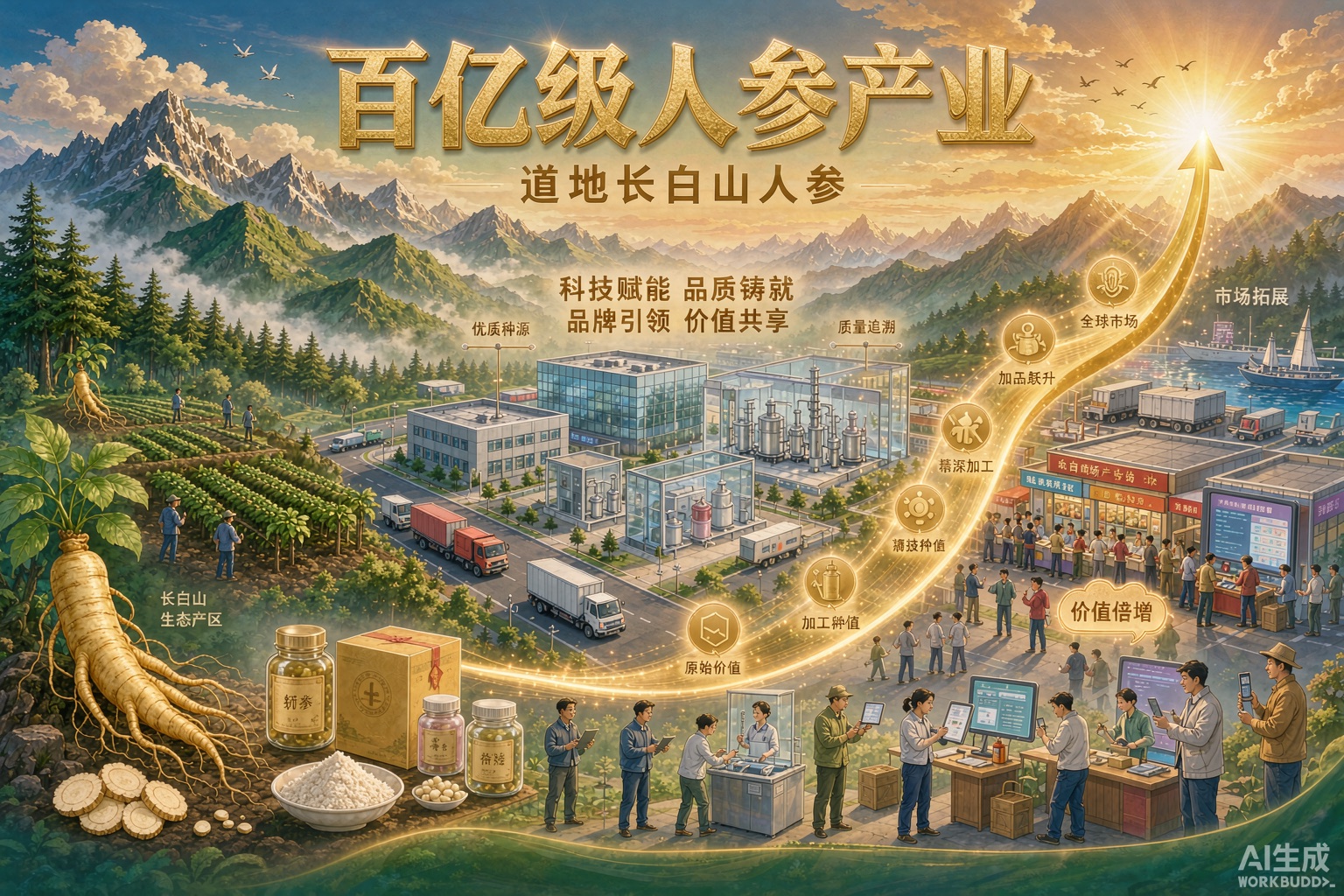
After the National Health Conference called for upgrading health industries and inheriting traditional Chinese medicine innovation, Jilin Province — China's core ginseng region — released a progress report that reads like a case study: the province's ginseng industry passed 100 billion yuan (over 105 billion) in comprehensive output value in 2025.
Jilin runs two systems in parallel:
Ecological stewardship rules and "one code per root" traceability protect quality at the source.
Universities — Jilin University, Changchun University of Chinese Medicine, Jilin Agricultural University — are pooled into government-enterprise-research platforms targeting ginsenosides, polysaccharides and small-molecule ginseng peptides. The explicit goal: break the "raw material only" trap that kept margins low for decades.
Beyond the traditional decoction and wine uses, the province now produces five series and 4,000+ products — foods, medicines, supplements, skincare, biologics — using root, stem, leaf, flower and fruit. Instant ginseng slices, ginseng drinks, peptides and saponin extracts lead the consumer shelf.
The "Changbai Mountain Ginseng" brand ties the whole chain together, backed by standards, GI licensing and the traceability backbone.
For international buyers and wellness brands, a 100-billion-yuan industry means:
Jilin commits to deepening standardized cultivation, research breakthroughs and processing chains — with the explicit framing of serving Healthy China and rural revitalization. The ginseng county model we covered in Fusong is the template being scaled province-wide.
When a government, a university system and a thousand-year crop align on one playbook, the result is a new industrial category. Jilin's ginseng economy is no longer farming — it is health manufacturing.
Explore more Eastern wellness wisdom at TCM Global.