← Back to TCM Global · All articles
2026-10-20
For centuries, ginseng has held a place of quiet reverence in Eastern wellness traditions—offered to elders, steeped through long winters, and regarded as a root that supports vitality rather than simply treating symptoms. Today, a growing body of cellular research is asking a fascinating question: what actually happens inside our cells when we consume ginseng? Part of the answer may lie in a process called histone acetylation—an epigenetic mechanism that helps determine which genes are switched on and which remain quiet.
Every cell in your body contains the same DNA, yet a liver cell behaves nothing like a neuron. The difference lies in *expression*—which genes are read and which are silenced. Epigenetics is the study of these heritable changes in gene activity that don't alter the DNA sequence itself.
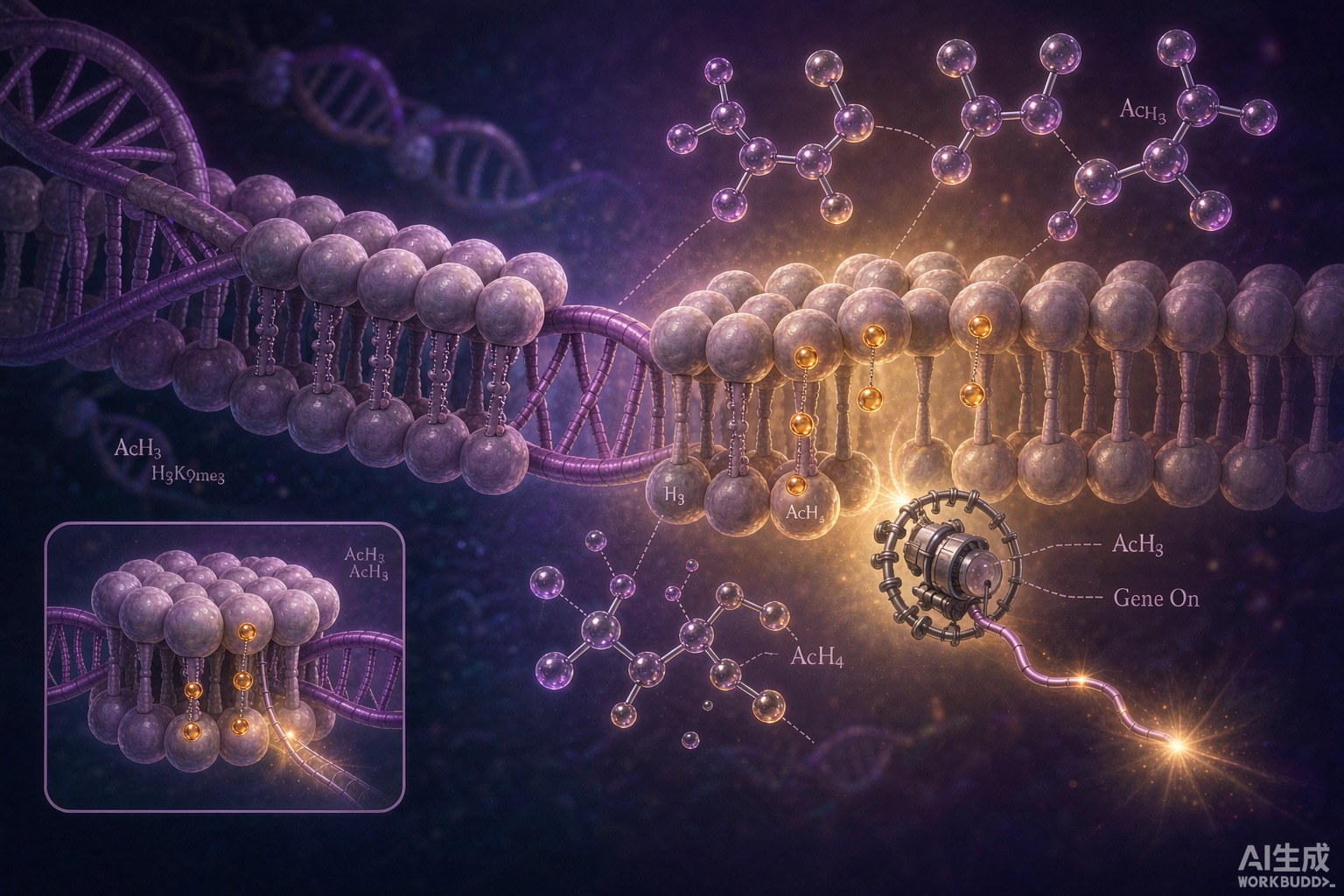
One of the best-studied epigenetic marks is histone acetylation. DNA in our cells is wound around protein spools called histones. When enzymes called acetyltransferases add acetyl groups to these histones, the spools loosen, and the surrounding DNA becomes more accessible—allowing genes to be transcribed. When deacetylases remove those groups, the chromatin tightens, and gene expression quiets. Think of it as a dimmer switch rather than a hard on/off toggle.
The active constituents of ginseng—collectively known as ginsenosides—have drawn considerable interest from researchers studying cellular signaling. Laboratory and animal studies have suggested that certain ginsenosides may influence the activity of enzymes involved in histone acetylation and deacetylation, thereby influencing patterns of gene expression. These are early-stage findings, and much remains to be understood about how they translate to everyday human wellness. Still, they offer an elegant bridge: the same quiet, root-based tradition that emphasized balance and supported function now meets a scientific framework of cellular regulation.
It is worth noting, too, that plant compounds are rarely simple. Ginseng contains a spectrum of ginsenosides—each with distinct structures—and their interactions with cellular systems are nuanced. This complexity is part of why traditional preparations often favored whole-root extracts over isolated fractions.
Traditional Chinese Medicine has long described ginseng in terms of *qi*—a concept of vital energy and support. While modern science does not map *qi* directly onto any single molecule, the direction of interest is striking: both frameworks emphasize regulation and balance rather than blunt intervention. Histone acetylation, in this light, reads almost like a molecular echo of classical TCM language—an internal harmony of expression, tuned by environment, diet, and time.
This is not to overstate the connection. Rather, it is an invitation to appreciate the depth of a tradition that observed function long before science could describe mechanism.
For those who enjoy ginseng as part of a calm, premium wellness routine, the epigenetic lens adds a layer of respect. It reminds us that the body is a system of signals—responsive, adaptive, and influenced by what we consume and how we live.
A few grounded practices:
Ginseng's enduring reputation is built on centuries of observation. Modern research into histone acetylation offers one possible thread in explaining why that reputation persists—pointing toward cellular mechanisms of gene regulation that are subtle, adaptive, and still being mapped. At TCM Global, we see this not as a claim to make but as a conversation to continue: one where Eastern heritage and contemporary science sit together, each deepening our appreciation of the other. Enjoy ginseng as part of a considered wellness practice—grounded, unhurried, and rooted in respect for the body's own intelligence.
Explore more Eastern wellness wisdom at TCM Global.