← Back to TCM Global · All articles
2026-10-20
For centuries, ginseng has been revered in Eastern wellness traditions as a premier adaptogen—a plant that helps the body maintain balance. Now, modern science is catching up with tradition. A recent breakthrough using single-cell mass spectrometry imaging has allowed researchers to peer inside the ginseng root cell by cell, revealing exactly where and how this remarkable plant produces its own medicine.
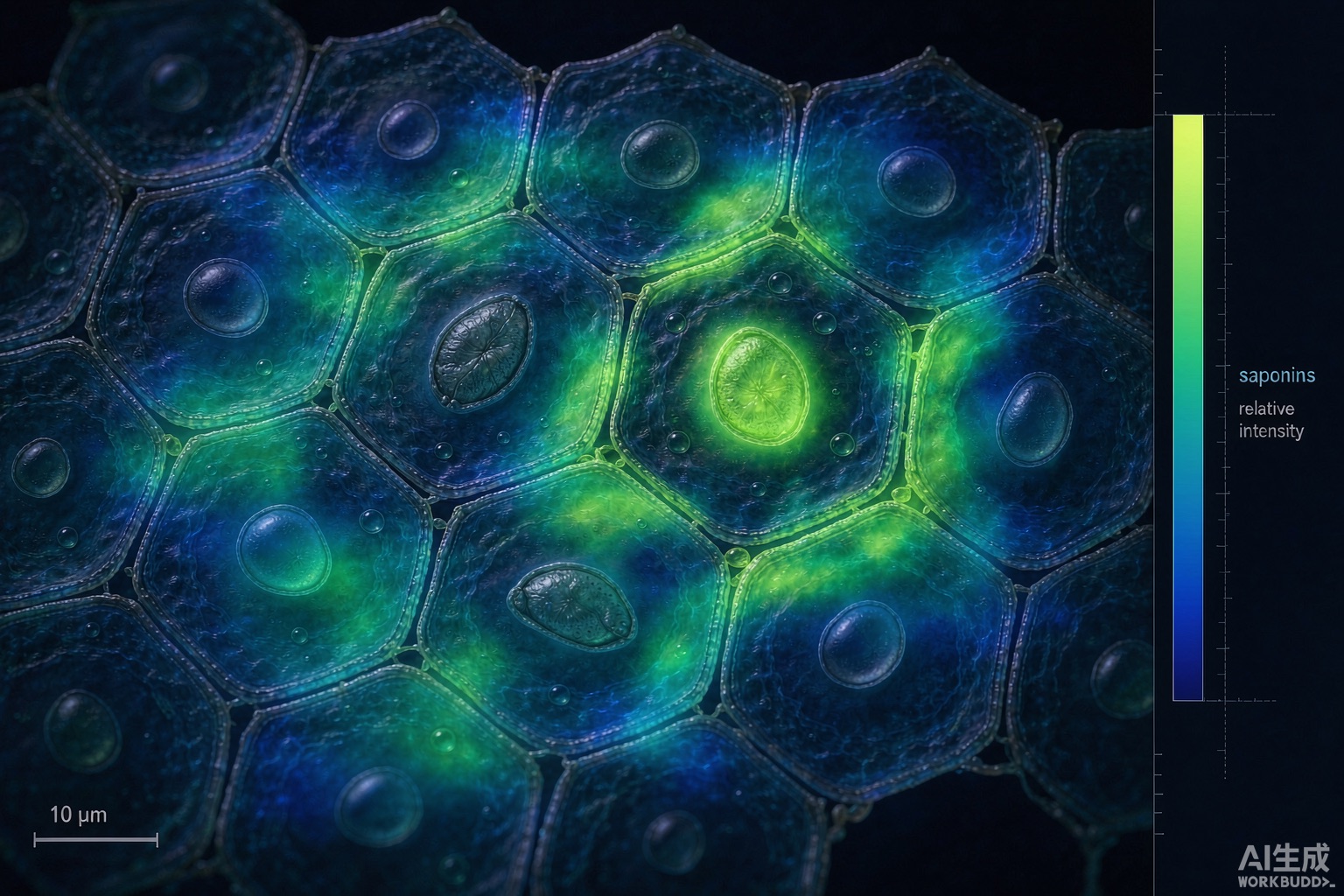
Mass spectrometry imaging is a technique that maps the distribution of molecules across a tissue sample. When applied at the single-cell level, it provides unprecedented detail. In a study published in *Nature Plants*, scientists used this method to visualize the spatial distribution of ginsenosides—the primary bioactive compounds in ginseng—within the root.
The imaging revealed that ginsenosides are not uniformly distributed. Instead, they are concentrated in specific cell types, particularly in the outer layers of the root and in specialized structures. This suggests that ginseng has evolved a sophisticated system for synthesizing and storing its medicinal compounds, likely as a defense mechanism or to interact with its environment.
This research bridges traditional wisdom and cutting-edge science. In Traditional Chinese Medicine (TCM), ginseng is valued for its ability to support Qi, or vital energy. The new findings provide a material basis for this concept by showing that the plant's active constituents are produced in specific locations, essentially creating a "medicine factory" within the root.
Understanding where ginsenosides are produced can help cultivators and consumers alike. It offers insights into how growing conditions, harvest timing, and processing methods might influence the concentration of beneficial compounds. At TCM Global, we believe that such scientific validation enhances our appreciation for the plant and informs our commitment to quality.
While single-cell imaging reveals the microcosm, traditional wisdom emphasizes the whole. TCM practitioners have long used ginseng in its entirety, believing that the synergy of all its components—not just isolated compounds—contributes to its wellness benefits. The new research supports this holistic view by showing that ginseng's chemistry is intricately organized, with different cell types working together to produce a complex array of metabolites.
It's important to note that this research is about understanding the plant, not making health claims. Ginseng is a botanical that has been used for centuries to support overall well-being, and modern science continues to uncover the elegance of its design.
At TCM Global, we are passionate about sharing the latest scientific insights while honoring ancient traditions. Our ginseng products are crafted with care, respecting the integrity of the whole root. Whether you enjoy ginseng as a tea, capsule, or extract, you are participating in a legacy that spans millennia—now illuminated by the lens of modern science.
Single-cell imaging has opened a window into the secret life of ginseng, showing us where it makes its own medicine. This knowledge deepens our respect for this remarkable plant and reinforces the wisdom of traditional practices. As we continue to explore the intersection of science and tradition, we remain dedicated to bringing you the finest ginseng and other TCM herbs, backed by both heritage and innovation.
*Disclaimer: This article is for informational purposes only and does not constitute medical advice. Always consult with a qualified healthcare professional before using any herbal supplements.*
Explore more Eastern wellness wisdom at TCM Global.