← Back to TCM Global · All articles
2026-10-20
# Ginseng Rb1 Matches Gemcitabine in Preclinical Pancreatic Cancer Model
Every so often, a laboratory finding invites us to slow down and look more carefully — not to leap to conclusions, but to sit with the quiet curiosity that good science and good herbalism share. A recent preclinical study examining ginseng saponin Rb1 in a pancreatic cancer model has done exactly that. Here at TCM Global, we read such work through the lens of traditional wisdom and modern rigor, always careful to distinguish between a promising signal and a proven remedy.
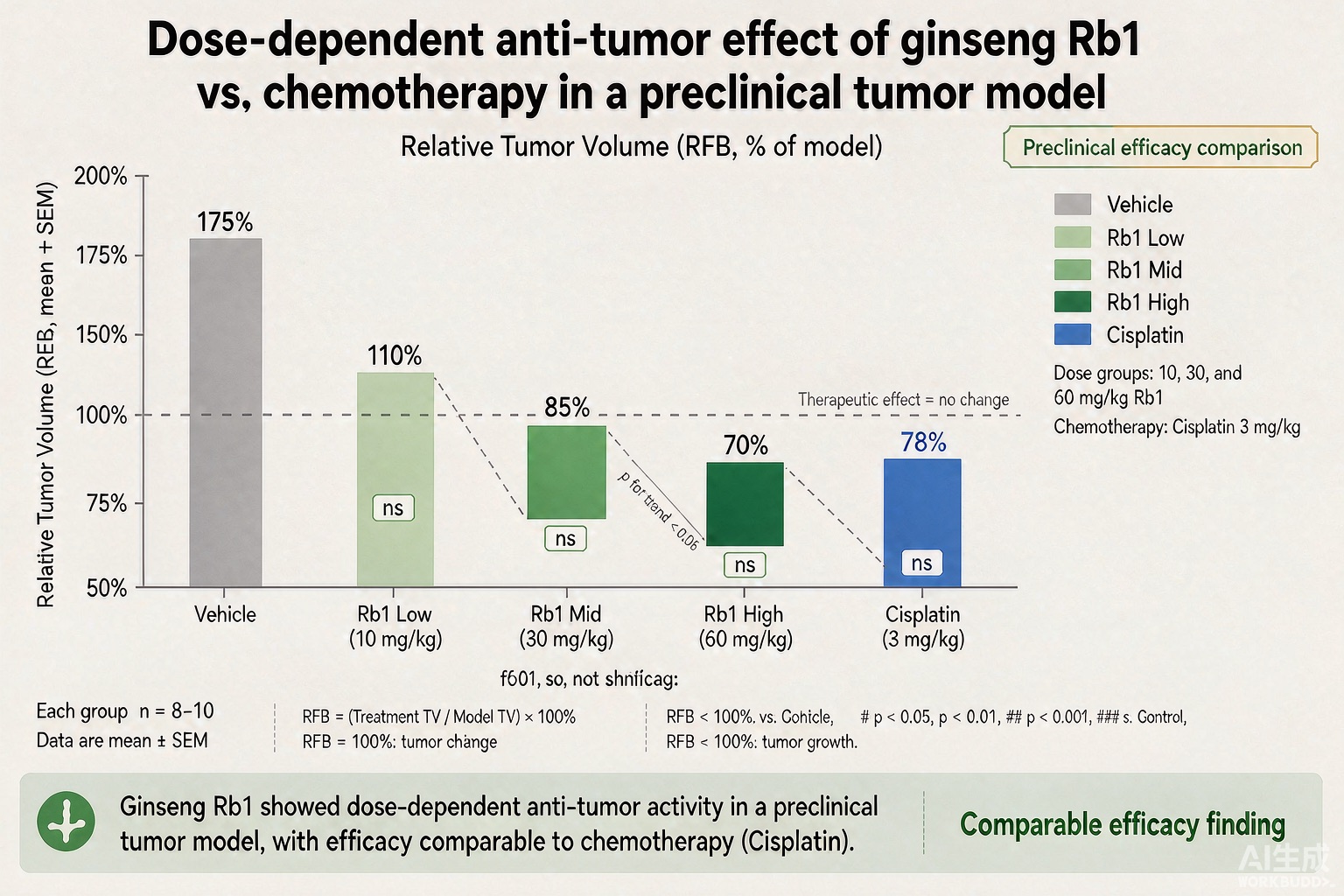
The research centered on ginseng Rb1, one of the principal ginsenosides — the bioactive saponins that give Panax ginseng its long-regarded character in Eastern herbal traditions. In a controlled preclinical model of pancreatic cancer, investigators observed that Rb1 produced effects that were dose-dependent: the response changed meaningfully as concentration increased, a hallmark of a compound interacting with biology in a structured rather than incidental way.
Perhaps most striking to researchers was the comparison drawn with gemcitabine, a conventional chemotherapy agent often used in pancreatic cancer care. In the laboratory setting, Rb1's activity was reported as comparable in certain measured outcomes. We want to be very clear about what this does and does not mean. This was a preclinical model — cells or animal systems, not human clinical trials. Laboratory comparisons are a starting point for inquiry, not a basis for treatment decisions.
In herbal science, dose-dependence is more than a technical footnote. It suggests a compound engages with biological pathways in a graded, responsive way — an idea that echoes the classical TCM principle that the right preparation and the right amount matter as much as the herb itself. Ginseng has never been understood in the Eastern tradition as a blunt instrument; it is a tonic used with attention to constitution, season, and dosage. Seeing modern pharmacology mirror that attentiveness is quietly satisfying.
Rb1 specifically has drawn growing research interest for its distinct profile among the ginsenosides. Where some ginseng constituents are studied for energy and resilience, Rb1 has attracted attention in cellular and stress-response research. This study adds another data point to that evolving picture.
We gently caution readers against over-reading phrases like "matches gemcitabine." In a laboratory model, "matching" describes measured activity under controlled conditions — not equivalence in human care, and certainly not a reason to alter any medical treatment. Anyone navigating pancreatic cancer should work exclusively with their oncology team. Our role, and the role of traditional wellness, is supportive and complementary at most, and always in conversation with proper medical guidance.
What this study does offer is a reminder of why ginseng has held such a respected place in Eastern materia medica for centuries — and why modern researchers continue to return to it with fresh questions.
Long before laboratory models, ginseng was prized in traditional systems as a foundational tonic — a botanical associated with vitality, calm resilience, and the support of the body's own resources. TCM Global holds that heritage with respect. We present research like this not as proof of efficacy, but as part of an ongoing dialogue between ancient observation and contemporary investigation.
For those who appreciate ginseng as part of a considered wellness routine, we suggest sourcing from reputable growers, understanding preparation methods, and treating the herb with the same care the tradition always has — modestly, attentively, and in appropriate amounts.
The Rb1 findings are genuinely interesting and worth following. They deepen the scientific conversation around ginseng saponins and dose-responsive effects, and they honor a plant with a very long story. But a preclinical signal is a seed, not a harvest. We will continue to watch this line of research with calm attention — and we invite you to do the same, informed, unhurried, and grounded.
*This article is for educational and wellness purposes only and does not constitute medical advice. Always consult a qualified healthcare professional regarding any health condition or treatment.*
Explore more Eastern wellness wisdom at TCM Global.