← Back to TCM Global · All articles
2026-10-21
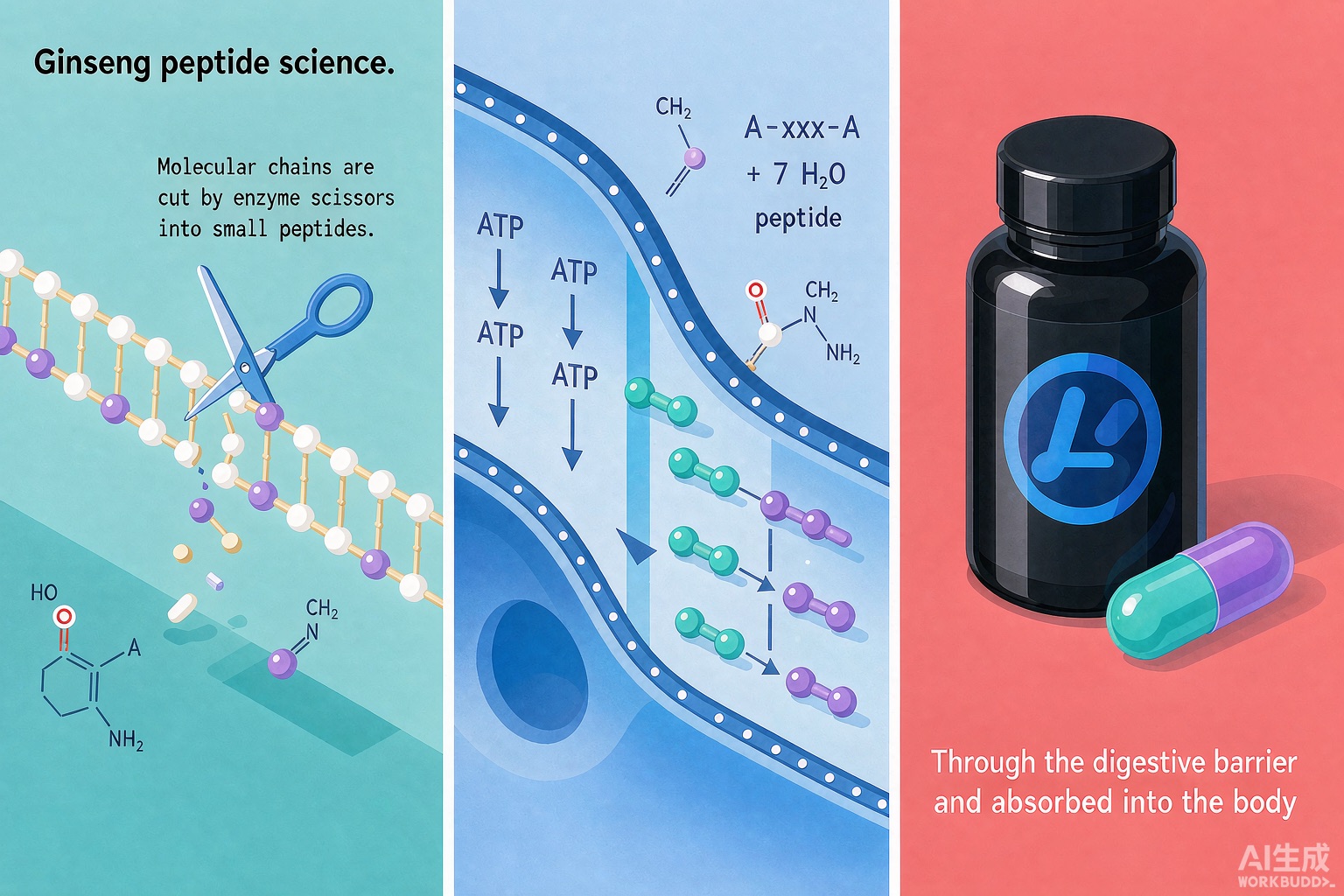
Traditional ginseng products ask your digestive system to do the work: break down the root's complex compounds and absorb what it can. Ginseng peptide takes a different route — using enzymatic hydrolysis to pre-cut ginseng protein into small bioactive peptides that absorb faster and more completely.
At Jilin Tigu Bioengineering in Fusong County, the process is enzyme-driven precision:
The company reports mastery of more than 30 peptide extraction techniques, all with independently developed patents — including custom-built extraction equipment.
Tigu is expanding into a 3 billion yuan Bioactive Peptide Cultural Industry Park, adding high-standard labs, an R&D center and GMP-certified health-food workshops. Meanwhile, Fusong's Daziran Bio offers 20+ ginseng deep-processing products — leaf drop pills, small-molecule peptide solid drinks — with annual output near 1 billion yuan, exporting saponin monomers to Japan, Singapore, Malaysia and Korea.
Ginseng peptide fits where traditional extracts struggle:
Ask suppliers for molecular weight distribution data — smaller average peptide chains generally mean faster uptake.
Enzymatic extraction is doing for ginseng what whey hydrolysates did for protein: taking a traditional ingredient and engineering it for the modern label. The category is young, well-capitalized, and worth watching.
Explore more Eastern wellness wisdom at TCM Global.