← Back to TCM Global · All articles
2026-10-20
For centuries, ginseng has held a quiet place of honor in Eastern wellness traditions — a root taken not for quick effect, but for steady, cumulative support. In the language of Traditional Chinese Medicine, ginseng is valued for its ability to nourish and restore, gently supporting the body's own resources over time. Today, modern research is asking a practical question that the old texts never could: when we take ginseng, how much of its goodness actually reaches where it matters — including the brain?
This is where the story of ginseng saponins and nanocarriers begins. It's a story of two worlds meeting: the patient wisdom of the East and the precise curiosity of contemporary delivery science.
Ginseng saponins — often called ginsenosides — are the best-studied active compounds in ginseng. They are natural plant molecules with a distinctive structure: a sugar-linked backbone that gives them their name. Different ginsenosides (such as Rb1, Rg1, and Rg3) have been explored in laboratory and preliminary research for their antioxidant and adaptogenic-style properties.
But there is a catch, and it is a familiar one in herbal science: ginsenosides are not especially easy for the body to absorb and circulate. Their size, solubility, and structure mean that a portion of what we consume may not reach the bloodstream in meaningful amounts — and reaching the brain is an even greater challenge.
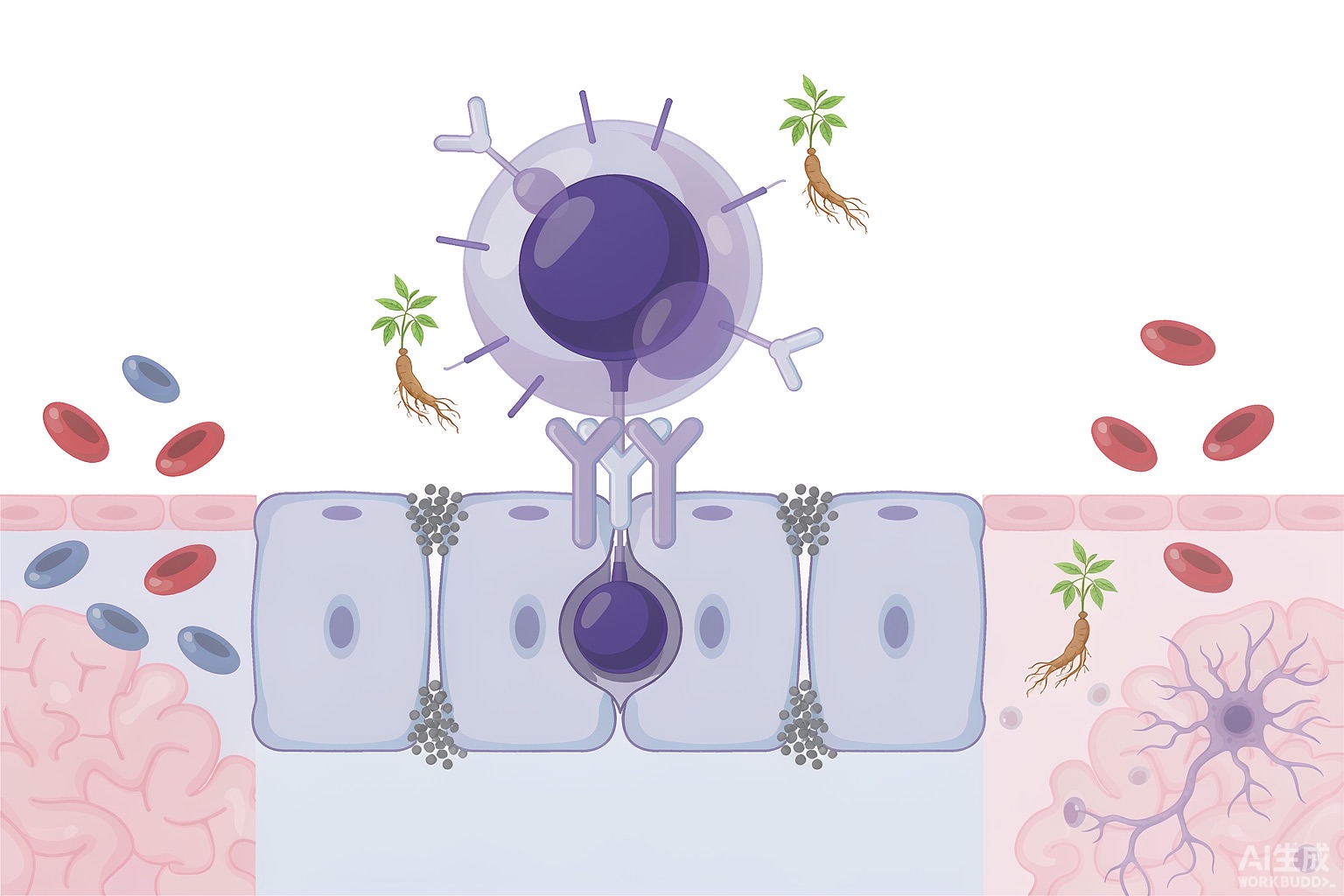
The brain is protected by the blood-brain barrier, a tightly woven interface that allows nutrients in while keeping many larger or unfamiliar molecules out. This barrier is essential — it safeguards the brain — but it also means that many beneficial plant compounds struggle to gain entry.
For ginsenosides, this gatekeeping is a real limitation. Even when these compounds enter the bloodstream, only a fraction may cross into brain tissue. So researchers have turned to a question that feels almost artisanal in its care: how can we help these molecules travel more gracefully to where they are needed?
Nanocarriers are microscopic delivery vehicles — measured in billionths of a meter — designed to encapsulate, protect, and transport delicate compounds. In the context of ginseng saponins, researchers have explored several types:
The appeal is straightforward. A nanocarrier can shield ginsenosides from degradation, improve how well they dissolve, extend their presence in the body, and — in some experimental models — enhance their ability to cross biological barriers, including the blood-brain barrier.
It is important to be clear and honest here: this is an area of active scientific exploration, not a settled conclusion. Much of the research on nanocarrier delivery of ginsenosides has been conducted in laboratory settings and animal models. We should not overstate what is known, and no herbal product should be positioned as a treatment for any condition.
What we can say is this: the research points toward a thoughtful idea. If delivery can be improved, then the longstanding traditional use of ginseng may eventually be supported by more efficient, better-understood pathways. For wellness-minded people, that is a reason for calm interest rather than hype — a sign that the conversation between ancient practice and modern method continues to deepen.
There is something quietly fitting about this research. Traditional Chinese Medicine has always emphasized that how a substance is prepared, combined, and delivered matters as much as the substance itself. Herbs were processed, decocted, and paired with care. Nanocarriers, in their own modern idiom, echo that principle: the form of delivery is part of the medicine.
At TCM Global, we find this intersection meaningful. The ginseng root remains what it has always been — a gentle, traditional botanical — while science continues to explore how its compounds might travel more effectively through the body. We approach these developments with curiosity, restraint, and respect for both traditions.
Ginseng saponins are fascinating molecules with a long cultural heritage. Nanocarriers represent an emerging, research-stage approach to helping them reach the brain more efficiently. The science is promising but preliminary, and the wisest stance is one of informed, unhurried interest.
For those who value ginseng as part of a balanced wellness ritual, the root's enduring place remains unchanged. What is new is our growing understanding of the journey its compounds make — and how, with care, that journey might one day be made a little smoother.
Explore more Eastern wellness wisdom at TCM Global.