← Back to TCM Global · All articles
2026-10-22
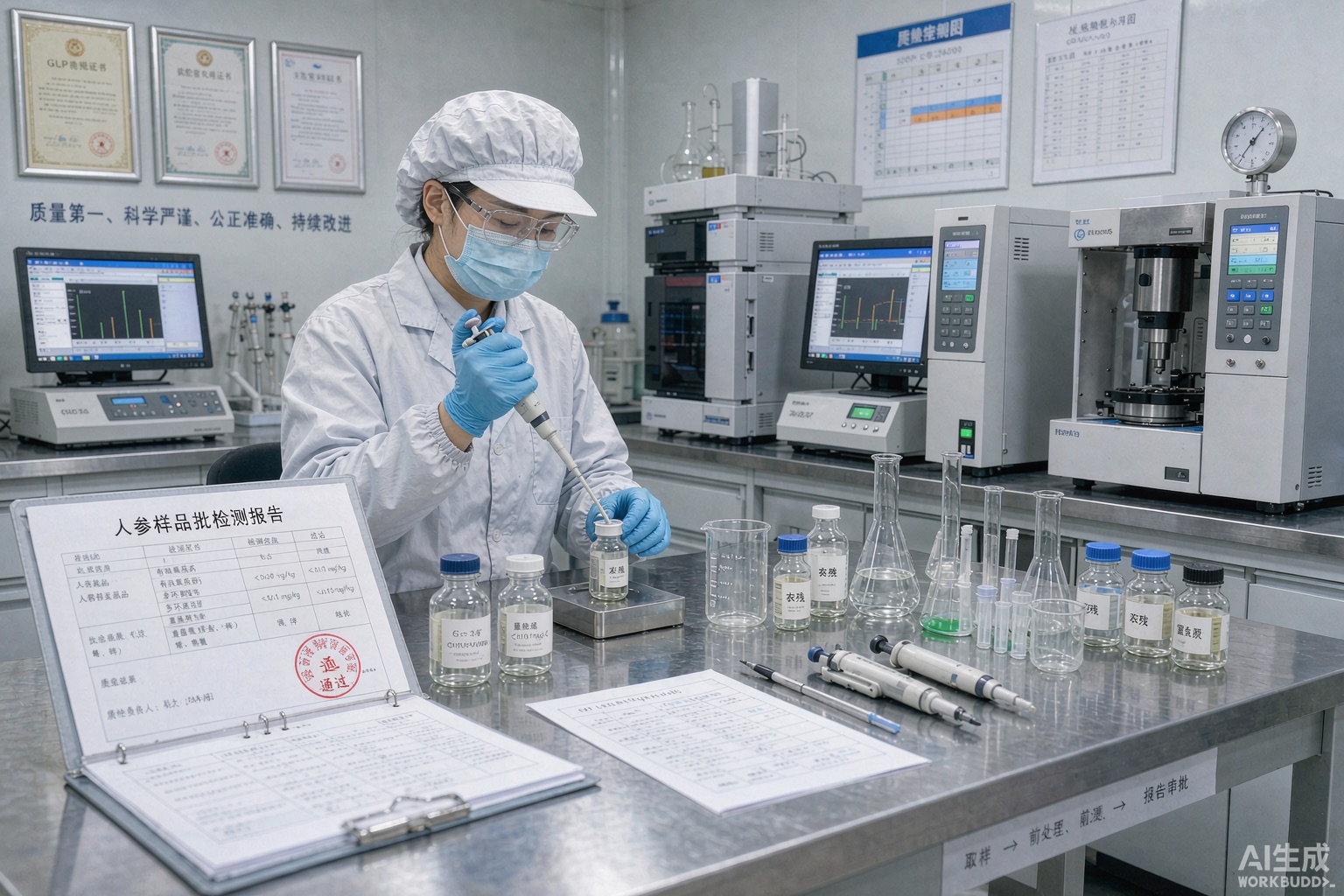
Behind every trustworthy ginseng shipment stands an unglamorous institution: multi-batch quality sampling. Jilin's provincial system pulls random lots from certified bases and markets, testing them in accredited labs — and ties results back to licenses and GI authorization.
The standard panels cover the three concerns international buyers always raise:
Fusong's industrial-park labs can run these panels at scale; the province's reporting emphasizes multiple sampling rounds across the year, not one-off campaigns.
Sampling without consequences is theater. Jilin's system connects results to:
Fail once, visibly, and the market learns the system has teeth.
The key design choice: lots are pulled at random, not nominated by sellers. This removes the 'inspection-ready batch' problem — every batch must be production-ready, because any of them might be tested.
Quality claims are cheap; quality enforcement is expensive and boring — which is exactly why it works. Jilin's sampling regime is the least visible but most load-bearing part of its ginseng trust system.
Explore more Eastern wellness wisdom at TCM Global.