← Back to TCM Global · All articles
2026-10-30
# Ginseng Market Price Trend 2027 Forecast for Global Buyers
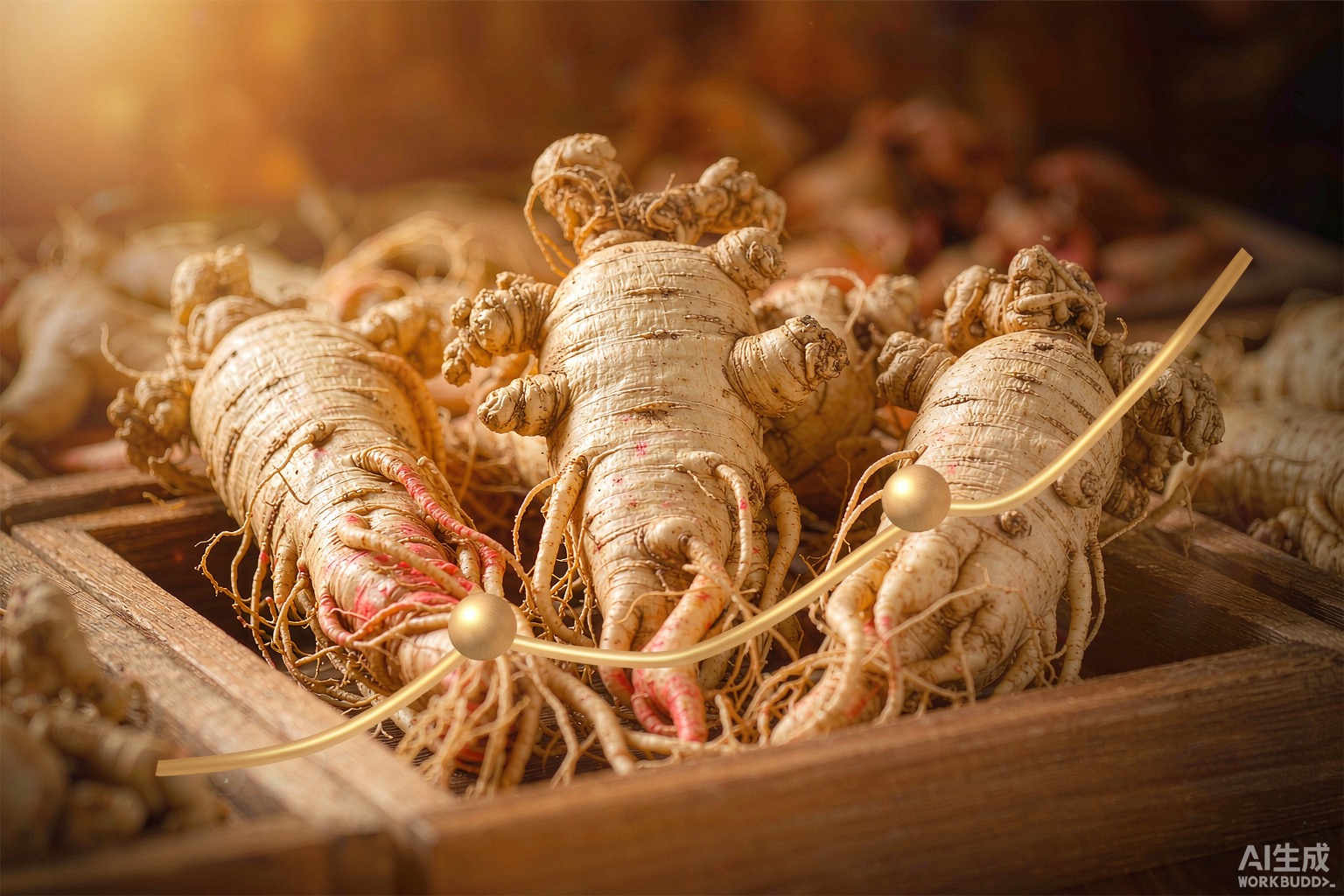
The ginseng market price trend into 2027 points to moderate increases — roughly 5-12% for farm-grown raw material at wholesale, with forest-grown and aged root premiums widening faster — driven by reduced planting acreage, rising labor costs, and sustained Western demand growth. For B2B buyers planning annual contracts, the practical takeaway is to lock Q1-Q2 2027 pricing for volume SKUs while treating premium categories as spot-market purchases. This forecast breaks down the drivers category by category, based on industry reporting and trade data patterns rather than any single proprietary source.
The structure of the market matters before any forecast. Farm-cultivated ginseng (4-6 year roots) trades in high volume with relatively transparent pricing; understory and wild material trade in small lots with wide dispersion. Wholesale benchmarks circulating in the trade going into 2027 look roughly like this:
| Category | Wholesale range (raw, dried) | 2027 direction | Key driver |
|---|---|---|---|
| Farm-grown 4-year root | USD 25-60/kg | Up 5-8% | Acreage contraction |
| Farm-grown 6-year root | USD 50-110/kg | Up 8-12% | Aging-cycle supply dip |
| Red ginseng processed root | USD 80-200/kg | Up 5-10% | Processing capacity demand |
| Forest-grown 10-15 yr | USD 150-600/kg | Up 10-20% | Fixed scarce supply |
| American ginseng (imports) | USD 60-150/kg | Up 5-10% | North American harvest variability |
Prices in finished-goods terms — what most buyers actually purchase — move with these raw material trends plus extract demand; our ginseng wholesale price per box guide maps raw-to-finished conversion for common SKUs.
Ginseng farming has a built-in oscillation: high prices in one season trigger expanded planting, and six years later the enlarged harvest depresses prices, discouraging the next planting round. Industry reporting through 2025-2026 points to reduced new-planting acreage in China's main producing regions after the softer price years of the mid-2020s, land competition from other crops, and stricter land-use policy in mountain areas. Because a root planted in 2026 cannot be harvested before roughly 2030, any near-term supply shortfall is structurally locked in. The most quoted 2027 risk scenario is a tighter 6-year-root harvest, which flows directly into red ginseng and extract pricing.
Two cost lines keep drifting upward. First, harvest labor: ginseng digging and sorting remain hand-intensive, and rural labor costs in northeast China have risen steadily year over year — commonly cited in the 5-8% annual range across recent seasons. Second, compliance costs: more factories now run full pesticide-panel testing (driven by EU import requirements — see our pesticide residue and EU limits guide), add traceability systems, and certify for Halal or organic programs. Each adds USD 0.01-0.05 per finished unit at typical volumes. Neither cost is negotiable away; both are being passed into FOB quotes.
Demand-side momentum is the strongest part of the 2027 story. Western wellness channels — energy and sports nutrition, "beauty from within," functional coffee and RTD formats — keep widening the buyer base beyond traditional Asian diaspora retail, a shift documented across our finished ginseng products import trend and TCM wellness trends 2027 coverage. Middle East premium retail adds another growth vector, as detailed in our Middle East market entry 2027 analysis. When a supply-constrained raw market meets broadening finished-goods demand, extract buyers competing for the same raw lots bid prices up first.
Three factors could bend the curve either way: a large unforeseen harvest in North Korea or unexpected export-policy shifts altering regional supply; a sharp demand slowdown in China's domestic gifting economy, which would redirect export-capable supply outward and soften prices; and currency movement, since RMB pricing converts differently across the year. Buyers should treat the 5-12% farm-grown range as the central scenario and build 10-15% price-validity cushions into 2027 retail planning rather than pricing to the optimistic edge.
The central expectation is yes, moderately: roughly 5-12% at wholesale for farm-grown raw material, with higher increases for 6-year root and forest-grown categories. Reduced planting acreage, labor cost inflation, and growing Western demand are the main drivers, though a weaker domestic Chinese gifting season could soften the rise.
Aged and forest-grown root is likely to move the most — potentially 10-20% — because supply is fixed by growing time of 10+ years and cannot respond to price signals, while farm-grown categories can at least adjust planting decisions within their 4-6 year cycle.
Lock annual contracts for high-volume farm-grown-based SKUs in Q1-Q2 before autumn repricing, buy premium categories as verified spot lots, forward-purchase standardized extract with COA verification, and build a 10-15% price cushion into 2027 retail planning rather than pricing to the best case.