← Back to TCM Global · All articles
2026-10-20
For centuries, ginseng has held a place of honor in Eastern wellness traditions — not as a quick fix, but as a slow, steady companion to a life lived in balance. Now, modern science is catching up with what generations of practitioners sensed intuitively: that the ginseng root is a remarkably sophisticated biochemical system. A recent study published in *Nature Communications* offers a striking window into that system, identifying the ginseng embryonic protoderm as a natural saponin factory — a discovery that deepens our appreciation for this ancient botanical.
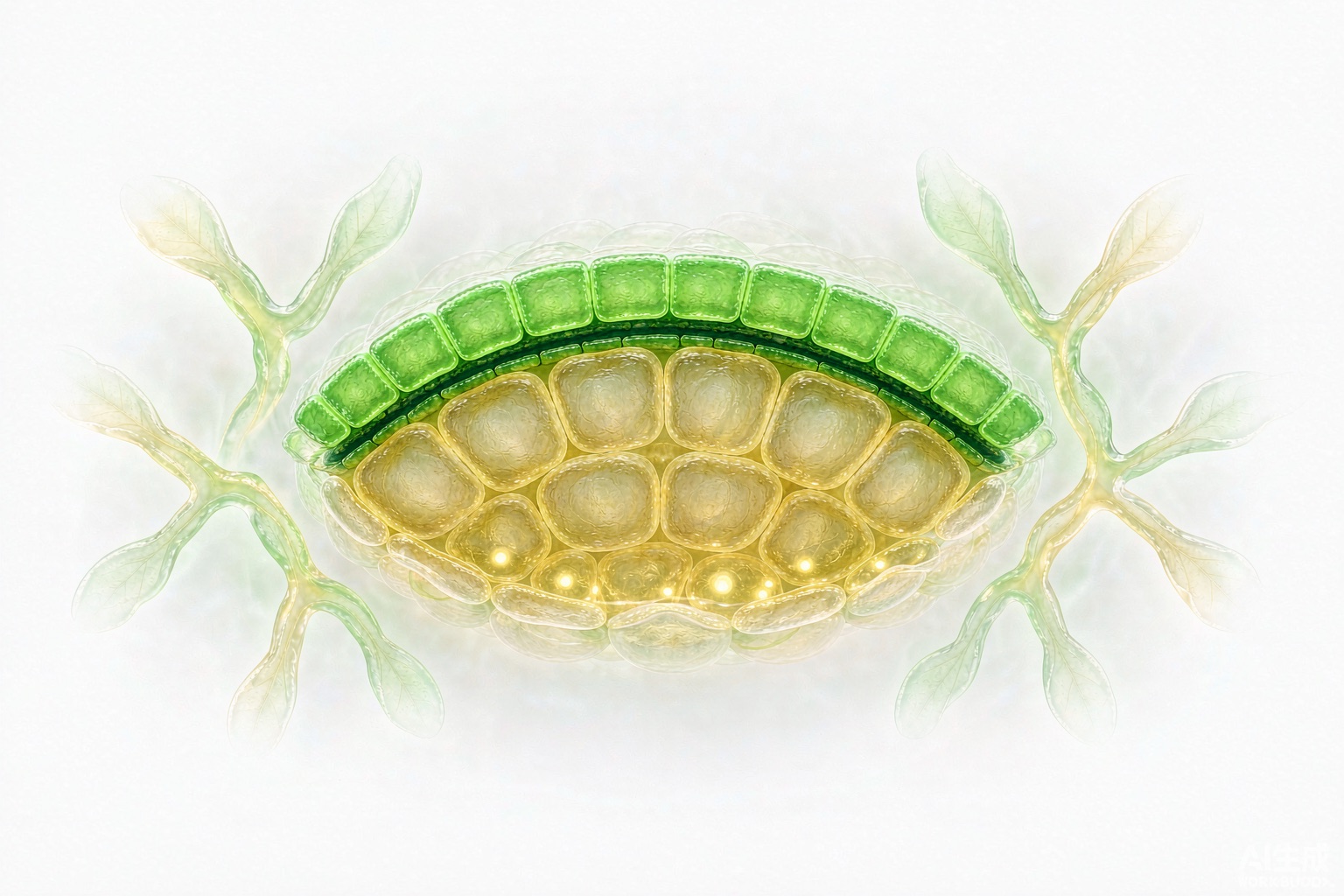
The research focuses on the embryonic protoderm — the outermost, earliest-forming tissue layer of the developing ginseng seed and root. What the scientists observed is elegant in its economy: this delicate tissue layer appears to function as a dedicated site of saponin biosynthesis, producing the ginsenosides that give ginseng its character and its long-standing reputation in wellness practice.
In other words, the very first cells to take shape in the growing plant are already hard at work — a quiet, natural factory operating long before the root reaches maturity. The finding reframes how we think about ginseng quality: it is not only about the size or age of a root, but about the vitality of the tissue from which everything else unfolds.
The protoderm is the plant's original boundary — the layer that touches the world first. That a tissue so early and so peripheral should be entrusted with producing such valuable compounds speaks to the intelligence built into the plant itself. For those who study and steward ginseng, this is a meaningful insight: the beginnings matter. The conditions of germination, the care given to seedlings, and the integrity of early growth all shape the eventual richness of the root.
Ginsenosides — the saponin compounds at the heart of this research — are what distinguish ginseng from other botanicals. Wellness traditions have long valued ginseng for its adaptogenic character, and modern interest has centered on these saponins as the plant's most distinctive chemical signature.
What the *Nature Communications* study adds is a clearer map of *where* and *how* these compounds come into being. Understanding that the embryonic protoderm serves as a natural saponin factory helps researchers and cultivators alike think more precisely about plant development, cultivation conditions, and quality assessment.
There is a pleasing symmetry here. Traditional Chinese Medicine has always emphasized the whole life of a plant — the soil, the season, the timing of harvest, the patience required. The modern finding that the earliest tissue layer is a center of biochemical activity resonates with that holistic view. It reminds us that quality is not injected at the end of a process; it is grown, cell by cell, from the very beginning.
At TCM Global, we find this kind of research deeply affirming. It does not replace tradition — it illuminates it. Each study like this one adds another layer of understanding to a botanical that has been trusted for millennia.
For those who incorporate ginseng into their wellness rituals, this research is a reminder of why sourcing and cultivation matter. A root grown with care — from seed to harvest — carries the cumulative benefit of a healthy beginning. The embryonic protoderm finding suggests that the integrity of early plant development is not a detail but a foundation.
This is also a gentle invitation to slow down. Ginseng has never been a botanical of haste. The study of its embryonic development, unfolding over time in the pages of a scientific journal, mirrors the patience the plant itself demands.
Science continues to reveal the layers of ingenuity within traditional botanicals, and ginseng — with its natural saponin factory at the very start of life — remains one of the most fascinating. We look forward to following this line of research as it develops, and to sharing what it means for thoughtful, tradition-rooted wellness.
*This article is for general wellness education and is not intended to diagnose, treat, or prevent any condition. Always consult a qualified practitioner before adding new botanicals to your routine.*
Explore more Eastern wellness wisdom at TCM Global.