← Back to TCM Global · All articles
Ecological Product Value Pilots: Why Tonghua Was Chosen
2026-10-22
The Policy Layer Under the Ginseng Boom
Beneath Tonghua's ginseng festivals and store networks sits an unusual policy asset: the city is a national pilot for ecological product value realization — a program exploring how to convert intact ecosystems into measured, monetized economic value.
What 'Ecological Product Value' Means
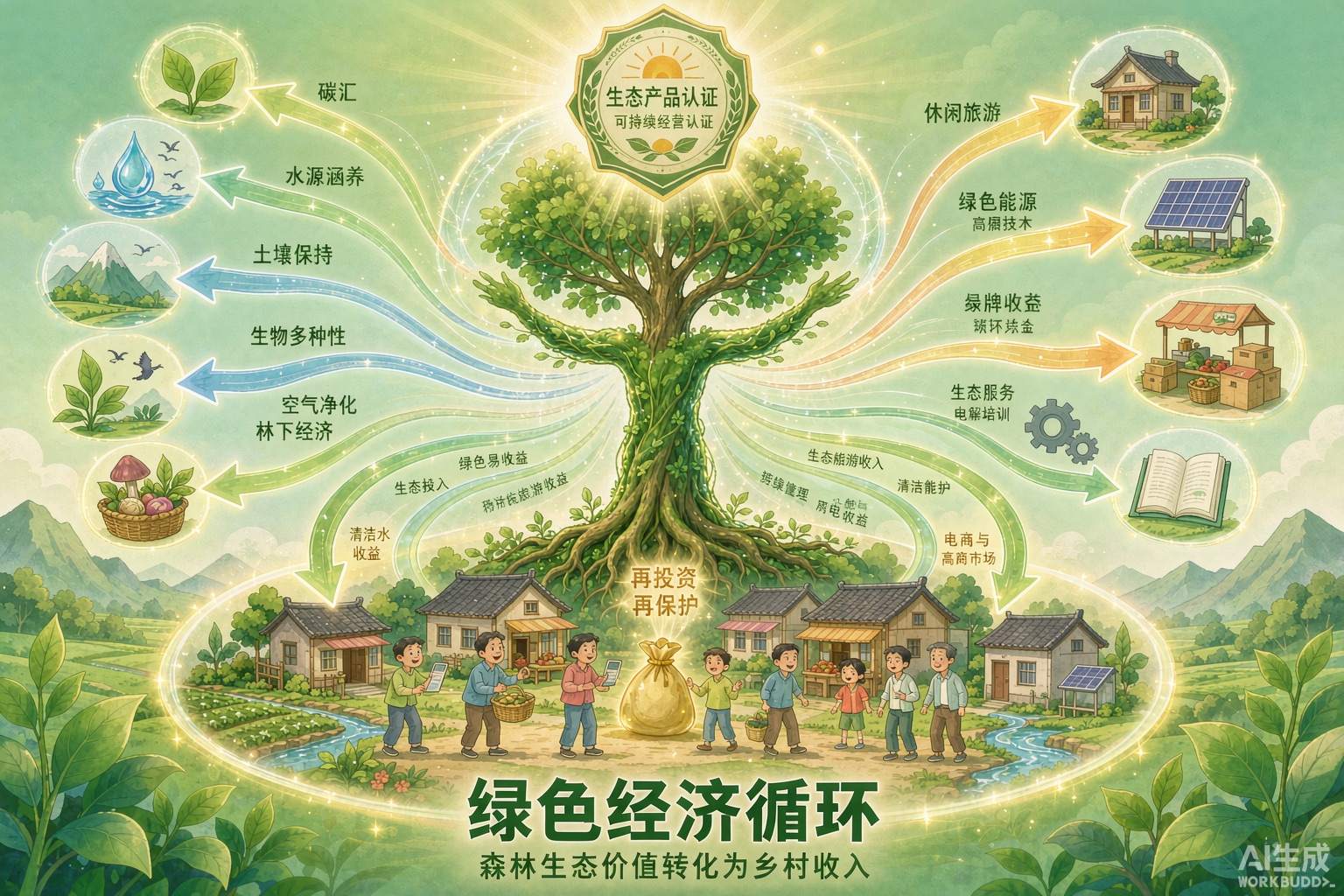
The concept answers an old economic problem: forests, clean water and biodiversity produce enormous value but no invoices. The pilot framework builds mechanisms to:
- Measure ecological assets (forest quality, water, soil health)
- Certify products whose value derives from those assets
- Monetize the premium through markets — GI pricing, eco-labels, brand premiums, even ecological compensation payments
Why Ginseng Is the Perfect Pilot Crop
Forest-simulated ginseng (linxianshen) is the rare agricultural product that requires standing, healthy forest to exist:
- The canopy is the growing environment
- The ecosystem determines quality
- Longer forest retention = higher value roots
Every mu of understory ginseng thus converts ecological integrity into cash income — the exact mechanism the pilot program is designed to prove.
The Chain in Action
- Farmers keep forests intact and grow ginseng under canopy
- GI and traceability systems certify the ecological origin
- Brands pay premiums for certified forest-cultivated roots
- Premiums make forest protection more profitable than clearance
- Policy rewards the outcome with pilot status and support
A genuine virtuous circle, with ginseng as the economic engine.
What It Signals for Buyers
- Sustainability claims are backed by policy: Tonghua's forest-ginseng story isn't marketing garnish; it's a monitored national pilot
- Long-term supply security: an industry whose economics depend on forest conservation will defend its resource base
- A model worth watching: if the pilot scales, eco-certified ginseng may become a template for other underforest botanicals
The Takeaway
The most interesting sustainability stories are the ones where the economics genuinely depend on ecology. Tonghua's ginseng pilots are exactly that — and they're backed by national policy.
Explore more Eastern wellness wisdom at TCM Global.