← Back to TCM Global · All articles
2026-10-22
Fresh ginseng is a root that keeps living after harvest — which makes shipping it a race against spoilage. Historically this capped the market: sellers concentrated near growing regions, or converted everything to dried product, losing the premium fresh segment.
Tonghua's ginseng e-commerce push (the 'Jipin Jidi' program) attacked the shipping problem as a system, not a single fix:
Express partners committed to preservation-grade packaging — moisture control, cushioning that protects delicate root hairs, and materials tuned to the root's respiration.
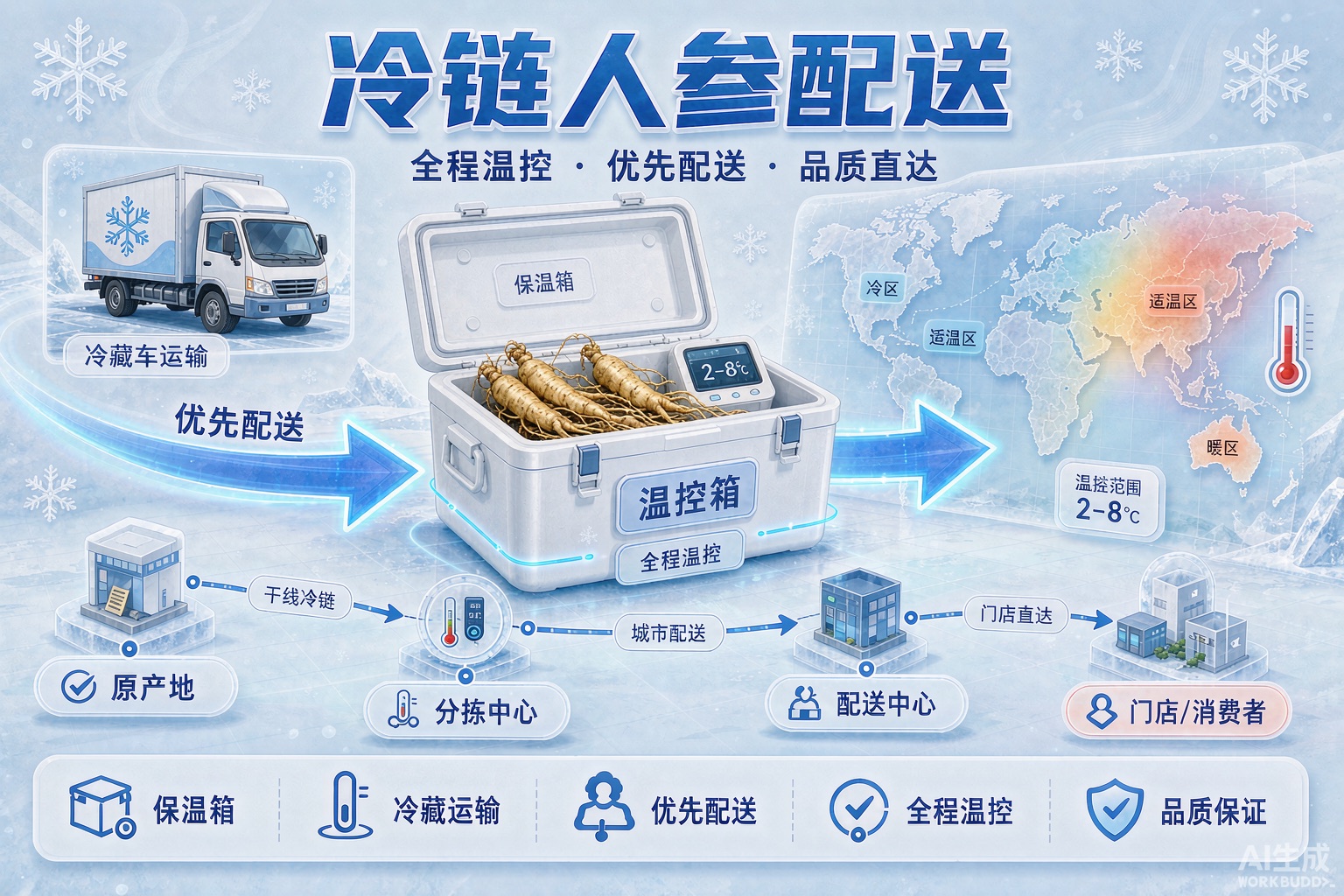
Refrigerated transport options move roots from field-adjacent packing stations to urban sorting hubs without temperature breaks.
Ginseng parcels get first-in-line handling — the difference between next-day delivery and a week in a warehouse.
A formal breakage and spoilage compensation program removes the financial risk that kept sellers from shipping fresh at all.
Subsidized shipping pricing makes fresh formats economical at e-commerce price points.
Cold-chain logistics is the invisible half of the ginseng boom. When roots arrive crisp instead of spoiled, the entire fresh-premium segment opens — and that is exactly what Tonghua's system achieved.
Explore more Eastern wellness wisdom at TCM Global.