← Back to TCM Global · All articles
2026-10-18
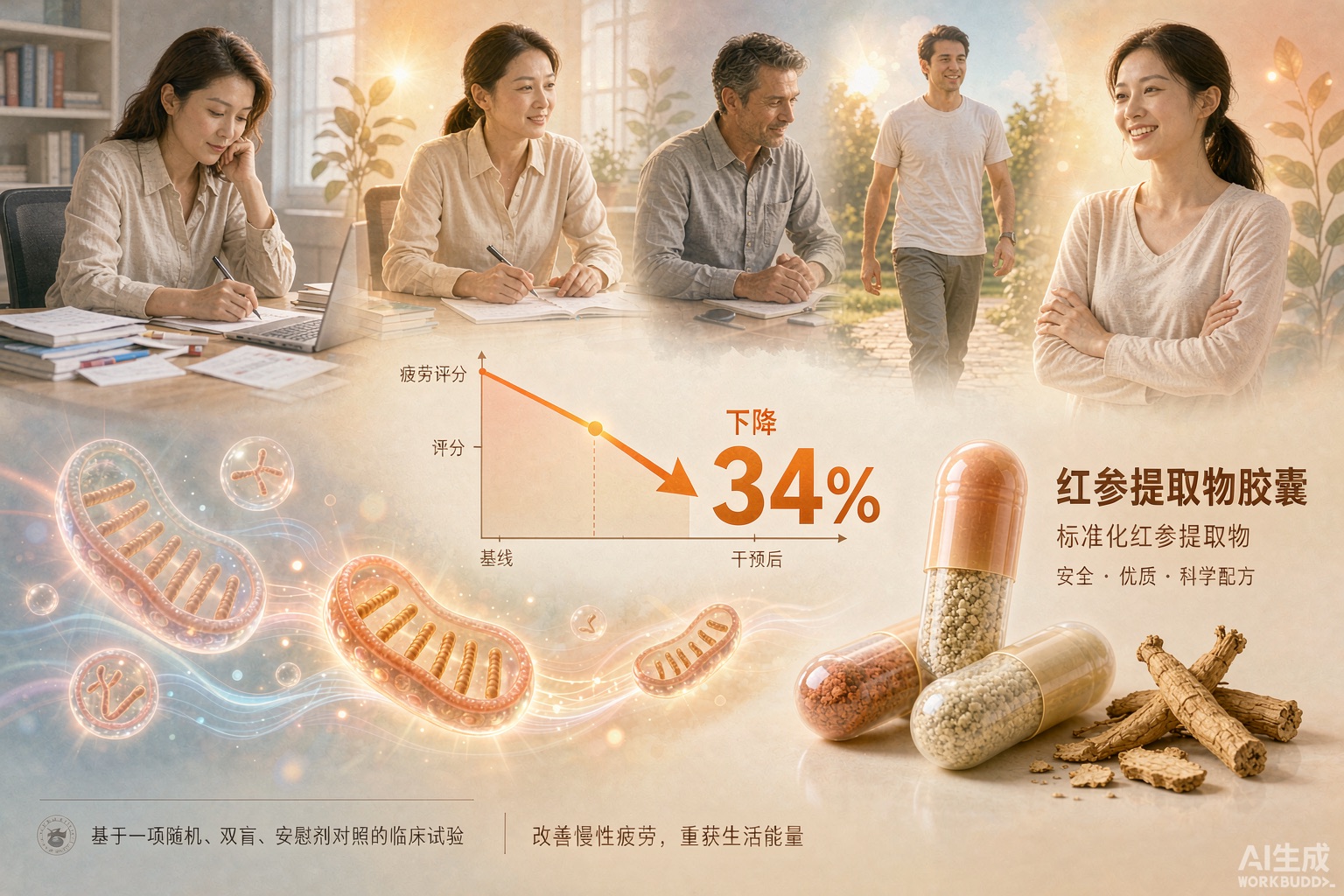
For centuries, ginseng has held a place of quiet reverence in Eastern wellness traditions—a root offered to the weary, the recovering, and the quietly depleted. Now, a randomized controlled trial conducted in Seoul has given that old intuition a modern voice. According to the study, participants taking a standardized ginseng extract saw their chronic fatigue scores fall by roughly 34 percent—a figure that has caught the attention of researchers and wellness seekers alike.
At TCM Global, we read news like this with measured interest. Not as a promise, but as a conversation between ancient practice and contemporary evidence. Here is what the trial suggests, what it doesn't, and how ginseng fits into a calm, considered approach to daily vitality.
The trial enrolled adults reporting persistent tiredness and divided them into groups receiving either a standardized ginseng extract or a placebo over a defined period. Fatigue was measured using validated self-report scales—tools that capture how energized, clear-headed, and capable a person feels across their day.
By the study's end, the ginseng group reported meaningfully lower fatigue scores than the control group, with the headline reduction landing near 34 percent. Because the extract was *standardized*, the researchers could point to consistent levels of ginsenosides—the active compounds in ginseng—rather than the variable potency of raw root. That consistency is what makes this kind of trial worth reading closely.
It's worth noting what the study does not claim. This was a wellness-oriented investigation into perceived fatigue, not a treatment trial for any medical condition. The results are encouraging, but they describe an experience of feeling more rested and resilient—not a cure.
Anyone who has shopped for ginseng knows the market is wide and uneven. Roots vary by age, origin, and processing. A traditional Korean red ginseng, steamed and dried with care, is a different preparation from a fresh American root or a powdered supplement of uncertain provenance.
Standardized extracts solve a practical problem: they make potency predictable. In the Seoul trial, participants knew what they were taking, and researchers could replicate the dose. For the wellness-minded consumer, this is a useful lesson—look for products that state their ginsenoside content rather than simply advertising "ginseng."
Long before clinical trials, ginseng was understood in Traditional Chinese Medicine as a warming, restorative root—one that supports the body's vital energy, or *qi*, particularly when a person feels drained, pale, or slow to recover. It was rarely used alone or casually. Instead, it appeared in carefully composed formulas, balanced against other herbs and matched to the individual.
That context is worth holding onto. The Seoul trial isolates a single extract for scientific clarity, but traditional practice treats vitality as something whole—shaped by sleep, food, season, and emotional steadiness. Ginseng was never meant to replace those foundations; it was meant to support them.
If the research leaves you curious, approach ginseng gently and thoughtfully.
The Seoul RCT is a welcome addition to the growing body of research on ginseng and everyday vitality. A 34 percent reduction in reported fatigue is a meaningful signal—one that echoes what Eastern tradition has quietly suggested for generations.
But at TCM Global, we believe wellness is never a single number. It is the accumulated result of rest, nourishment, and considered choices. Ginseng, taken with respect and quality in mind, can be one gentle thread in that larger pattern—a rooted tradition, now met by modern evidence, offered to anyone seeking steadier energy for the days ahead.
Explore more Eastern wellness wisdom at TCM Global.