← Back to TCM Global · All articles
2026-10-20
For centuries, the story of ginseng began in the mountains. Growers waited six years—sometimes longer—for a root to reach maturity, coaxing it from shaded forest soil the way their grandparents did. That patience is part of what gives ginseng its mystique and its place in traditional wellness practice.
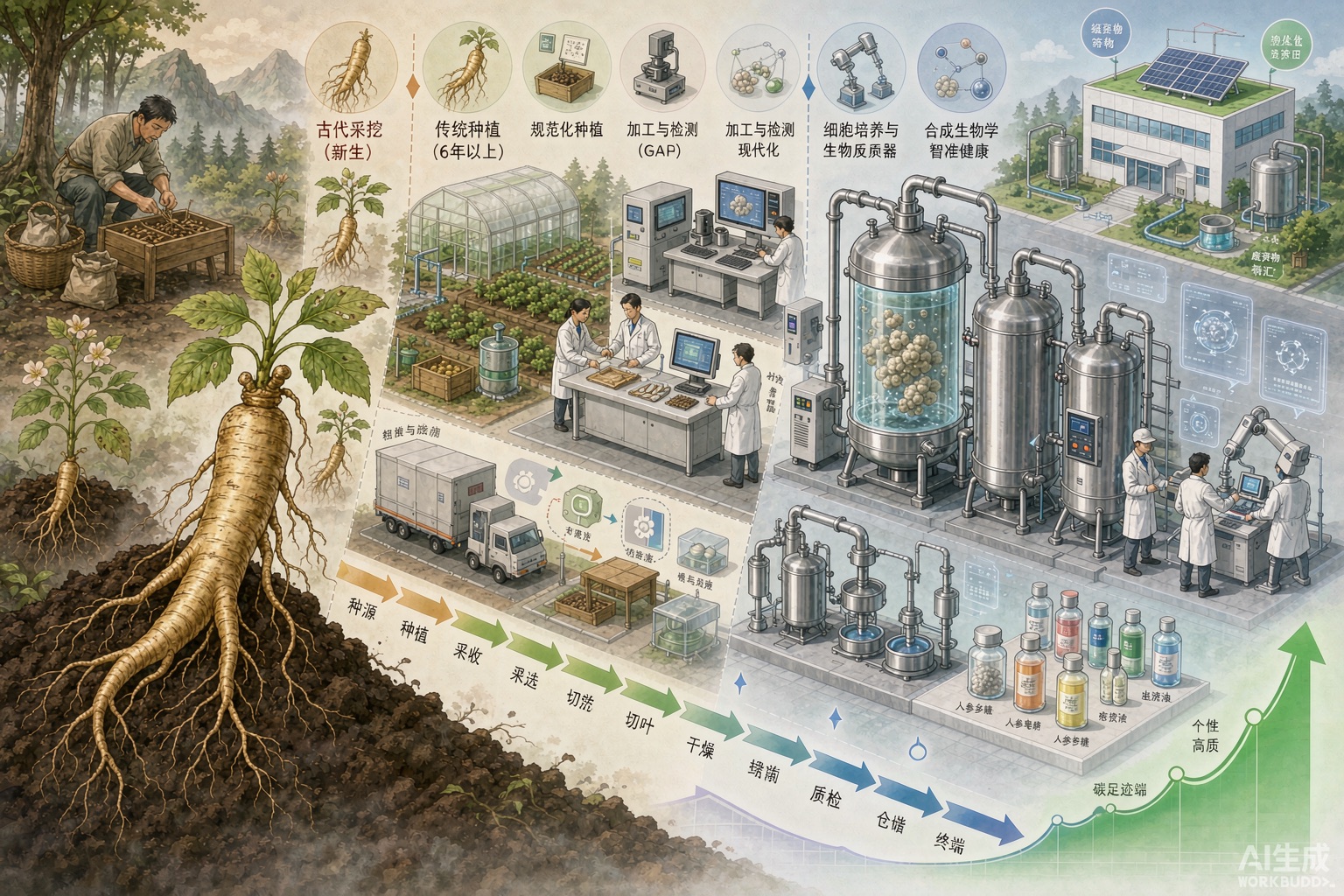
Today, a second chapter is being written. Alongside the forest, cultivated and wild-simulated roots, a quiet revolution is unfolding in laboratories: ginseng cells grown in controlled vessels, harvested without soil, roots, or a single mountain season. For anyone who values ginseng as a daily companion, understanding how these two paths connect matters more than ever. This is the story of the new ginseng supply chain—from six-year roots to cell factories.
High-quality ginseng has traditionally been defined by time. A six-year root is prized not because of a marketing label, but because maturity brings a fuller, more complex character—the kind that growers describe with the same care a vintner reserves for an old vine.
That patience shapes the entire supply chain:
This chain is deeply human: it depends on growers who know their soil, weather that cooperates, and a willingness to wait. Its weakness is fragility—climate stress, land pressure, and long lead times all push against supply.
Ginseng grows slowly. It dislikes being rushed, recovers poorly from disturbance, and often needs years before a harvest can be judged. Traditional cultivation ties up land and capital for a long time, and quality can vary harvest to harvest.
The result: a supply chain that has always been artisanal by nature. Now rising interest in plant-based wellness has put pressure on a system built on patience. Growers and makers have looked for ways to meet demand without abandoning the values that make ginseng special.
Enter the cell factory. In modern facilities, ginseng cells are cultured in sterile, nutrient-rich media inside bioreactors. Rather than waiting for a root to form, technicians cultivate cells directly under controlled temperature, light, and nutrient conditions, then harvest and process them.
Proponents emphasize several advantages:
It's worth being clear about limits. A ginseng cell is not the same thing as a mature ginseng root—the two differ in history, form, and composition, and neither is a replacement for the other. The most useful frame is complementary: cell cultivation as a modern supplement to a tradition, not a denial of it.
TCM Global sees emerging technology like this as part of a broader commitment to transparency in the ginseng chain—honoring time-tested roots while welcoming thoughtful advances.
The interesting story isn't competition—it's convergence. A supplier may grow traditional roots and also operate cell-culture facilities. A single brand can offer ginseng products that draw on both sources, matched to different uses and expectations.
The new ginseng supply chain increasingly asks:
These are familiar questions in traditional medicine, where sourcing has always been part of quality.
For the wellness-minded reader, the practical takeaway is simple: know your source. A well-made ginseng product, whether rooted in pristine mountain gardens or cultivated through cell culture, should offer clear information about its origin and production. For those who prefer the slow path, older roots and wild-simulated ginseng remain a meaningful choice. For those who value consistency in a daily routine, cell-cultured formats may fit naturally.
What unites both is a spirit of stewardship: care for the land, respect for tradition, and openness to thoughtful innovation. That is the future of the ginseng supply chain—roots, cells, and the quiet discipline of doing things well.
Explore more Eastern wellness wisdom at TCM Global.