← Back to TCM Global · All articles
2026-10-30
# Ginseng Advent Calendar Wellness Novelty: A B2B Product Guide
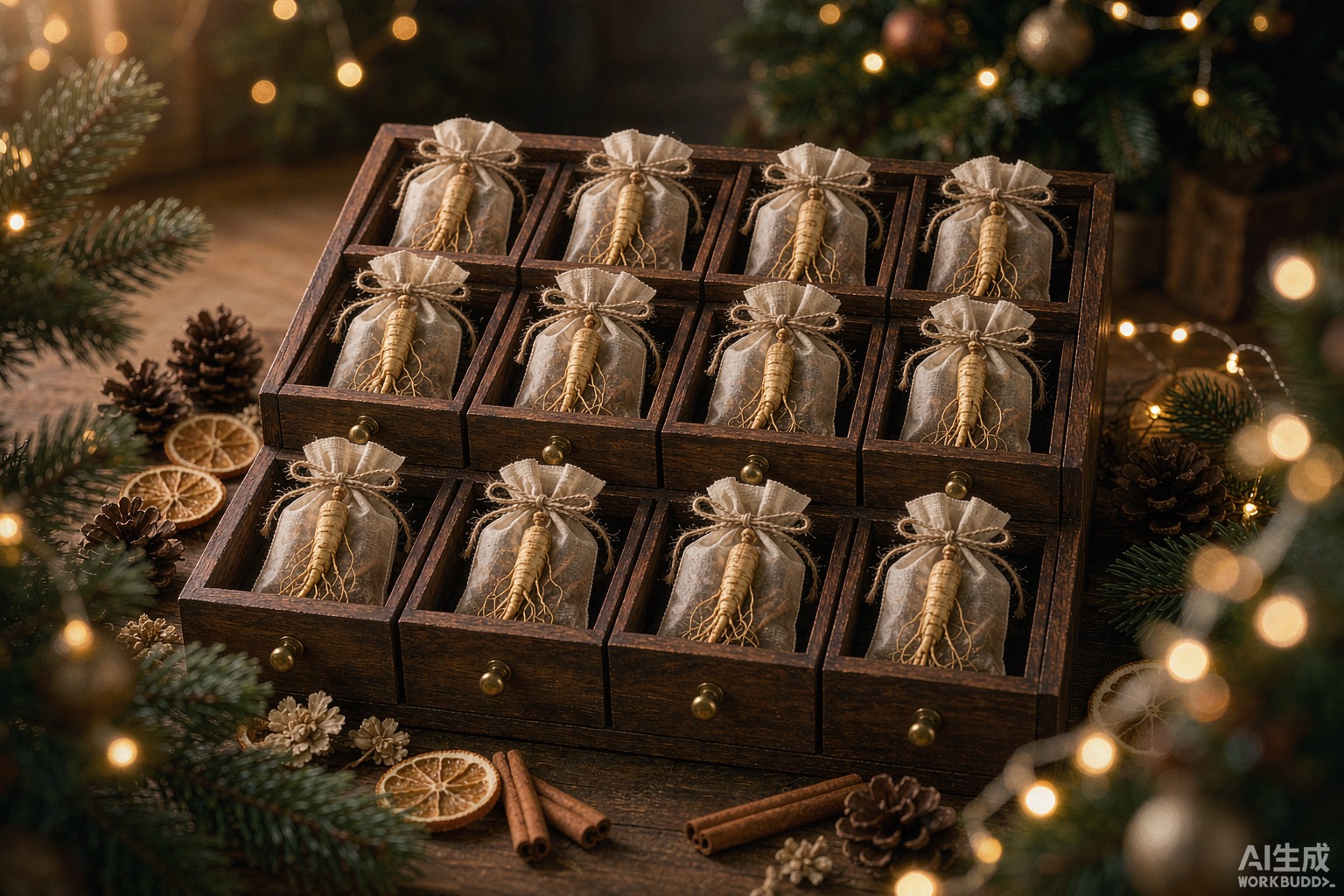
A ginseng advent calendar wellness novelty is a 24-day countdown box filled with single-serve ginseng formats — sachets, chewables, tea bags, or mini ampoules — and it is one of the most underexploited holiday SKUs in the TCM category: high perceived value, strong margins of 55-70%, and almost no established competition outside beauty advent sets. For B2B buyers, advent calendars solve a chronic December problem: how to differentiate in a gift market crowded with identical red-and-gold ginseng boxes. This guide explains the formats, economics, and timeline you need to bring one to market.
Advent calendars have expanded far beyond chocolate. Industry reports show beauty and wellness advent calendars growing at double-digit rates annually, with premium sets routinely retailing at US$60-150. The mechanics transfer naturally to ginseng because the category already sells daily rituals: one vial or sachet per day mirrors how regular users consume tonics anyway, and the countdown structure builds habit formation — the same behavior loop behind the daily-dose positioning discussed in our winter energy drinks ginseng opportunity analysis.
Three commercial advantages stand out:
Not every ginseng format survives 24 doors. The practical constraints are unit size (must fit standard calendar dies, typically 25-45mm deep), shelf stability (no refrigeration for months of retail display), and cost per unit (US$0.15-0.60 is the workable band).
| Format | Unit cost (FOB) | Shelf-stable? | Advent fit | Notes |
|---|---|---|---|---|
| Powder sachets (3g) | US$0.10-0.25 | Yes, 24 months | Excellent | Cheapest option; mixes into drinks |
| Chewable tablets / lozenges | US$0.08-0.20 | Yes, 24 months | Excellent | No liquid risk; good for office use |
| Tea bags with ginseng blend | US$0.10-0.22 | Yes, 24 months | Excellent | Familiar ritual; broad demographic |
| Honey-paste stick packs (10g) | US$0.20-0.40 | Yes, 18-24 months | Very good | Premium feel; pairs with concepts in our ginseng honey bundle gift ideas guide |
| Mini ampoules / vials (10ml) | US$0.30-0.60 | Yes, 18-24 months | Good | Highest perceived value; needs foam inserts |
| Jelly sticks (15g) | US$0.25-0.45 | Yes, 12-18 months | Very good | Popular with younger consumers |
Most successful calendars mix 3-4 formats — for example, 12 sachets, 6 tea bags, and 6 chewables — to create variety without multiplying packaging costs. A "surprise" door on December 24 (a larger 20ml vial or a mini gift card) consistently improves social sharing.
Advent calendars are a customized packaging product, so expect MOQs of 500-1,000 units from Chinese manufacturers — higher than plain drink cartons because the printed calendar box, tray inserts, and 24 individual wrappers are all custom components. Realistic landed economics for a mid-tier build:
That supports a 55-70% retail gross margin — comfortably above the 45-55% typical of standard ginseng extract multipacks. Full cost modeling for the wider private-label context is covered in our ginseng drink private label startup cost guide.
This is the decisive constraint. Advent calendars sell in a narrow window; missing December means waiting a full year. Work backward from shelf date:
| Milestone | Deadline for 2027 season |
|---|---|
| Confirm format mix and design brief | March-April 2027 |
| Samples approved (2-3 rounds typical) | May-June 2027 |
| Mass production (30-45 days) | July-August 2027 |
| Sea freight to destination (25-40 days) | September 2027 |
| In retail warehouses | Early-mid October 2027 |
Buyers who miss that ladder can still salvage the season with a near-custom approach: stock calendar boxes from a supplier's existing design with your logo sticker applied, available in as little as 30-45 days — but expect lower differentiation and MOQs around 300-500 units. The sampling workflow itself follows the standard process in our ginseng factory sample order process guide.
Position it as a "wellness countdown," not a supplement. Retail display works best near gift sections and checkout zones rather than the supplement aisle — the placement logic in our retail merchandising displays tonic drinks guide applies directly. Marketing angles that consistently perform:
Stay compliant in all copy: describe daily wellness rituals and traditional use, never disease prevention or treatment claims — the non-negotiable baseline for food and dietary supplement marketing in the US, EU, and Gulf markets.
Chinese manufacturers typically require 500-1,000 custom calendars per order because the printed box and 24-door tray are bespoke components. Stock-design versions with logo stickers can drop to 300-500 units.
Yes, provided each 10ml vial is individually sealed and the tray uses foam or molded pulp inserts to prevent breakage in transit. Shelf-stable ampoules avoid refrigeration and hold 18-24 months.
Begin the design and sampling process in spring, approve final samples by June, and complete mass production by August so goods reach retail warehouses by early October — the latest viable shelf date for advent sales.