← Back to TCM Global · All articles
2026-10-20
For centuries, ginseng has been revered in Eastern medicine as a tonic for vitality and mental clarity. Modern science is now unveiling the intricate processes that make ginseng effective, and at the heart of this discovery is a remarkable compound known as Compound K. This metabolite is not found in the ginseng root itself; rather, it is created through a fascinating collaboration between ginseng and the trillions of bacteria living in your gut. Understanding this connection offers a new perspective on how traditional herbs work in harmony with your body.
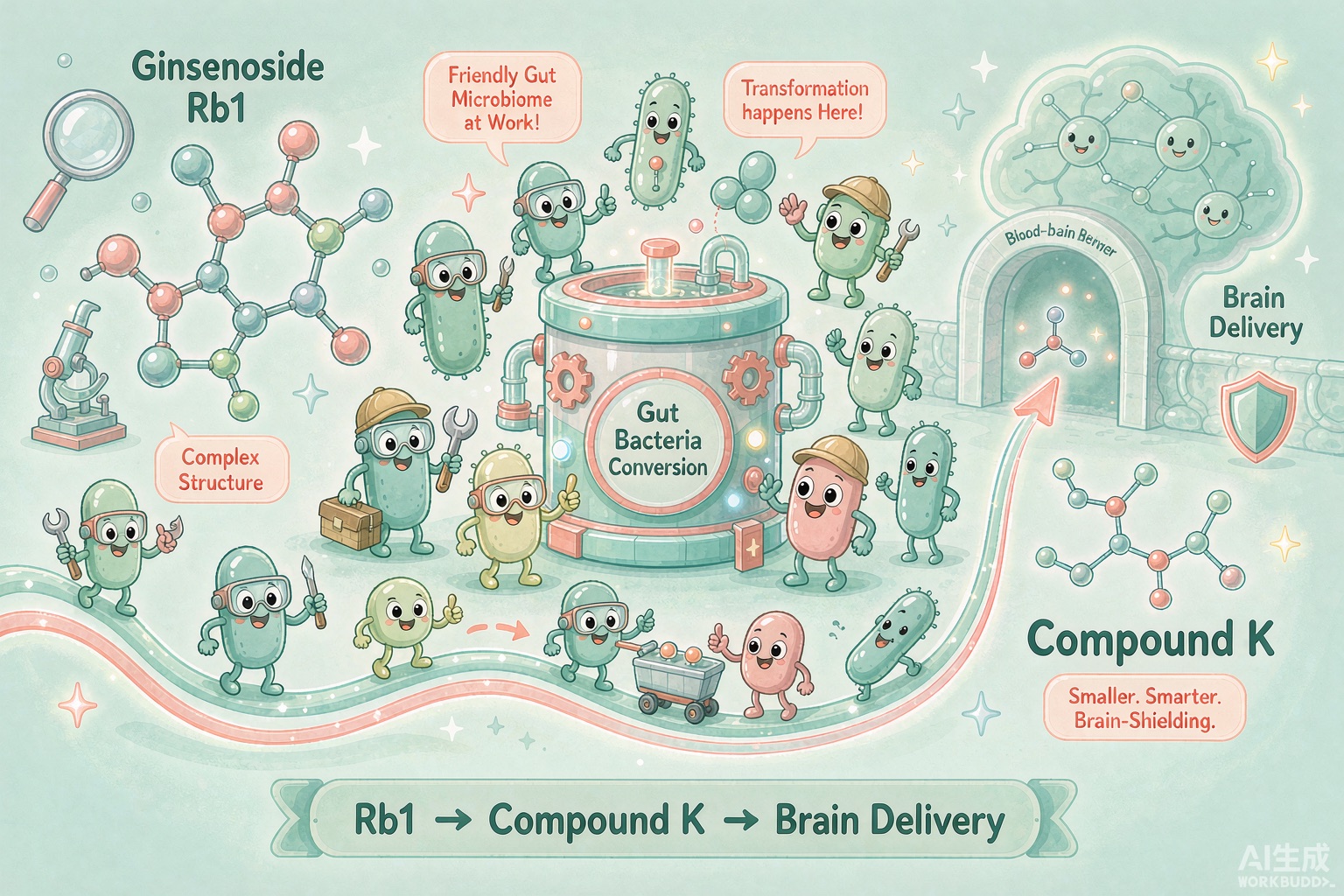
Ginseng contains a group of active compounds called ginsenosides. Among them, ginsenoside Rb1 is one of the most abundant. However, Rb1 is a large molecule that is poorly absorbed by the human body. It must first be transformed by gut microbiota—the diverse community of bacteria in your intestines—into smaller, more bioavailable compounds. Through a series of enzymatic reactions, bacteria such as *Bacteroides* and *Eubacterium* convert Rb1 into Compound K (also known as ginsenoside M1). This conversion is essential for many of ginseng's observed benefits, as Compound K is easily absorbed into the bloodstream and can cross the blood-brain barrier.
Once in the bloodstream, Compound K exerts a range of biological activities that support brain health. Research suggests that Compound K has neuroprotective properties, helping to shield neurons from oxidative stress and inflammation. It may also support the clearance of amyloid-beta, a protein associated with cognitive decline, and promote the health of mitochondria—the energy powerhouses of brain cells. While these findings are promising, they are primarily from laboratory and animal studies. For wellness seekers, Compound K represents the idea that ginseng's benefits are unlocked through a healthy gut, emphasizing the importance of gut-brain axis balance.
The efficiency of converting Rb1 to Compound K depends largely on the composition of your gut microbiota. Factors such as diet, age, stress, and antibiotic use can affect the abundance of bacteria responsible for this conversion. A diverse and balanced microbiome is more likely to produce higher levels of Compound K. This explains why some individuals may experience greater benefits from ginseng than others. To support this process, focus on a fiber-rich diet, fermented foods, and prebiotics that nourish beneficial gut bacteria. In traditional Eastern wellness, this aligns with the concept of nurturing the digestive system as the foundation of overall health.
In Traditional Chinese Medicine (TCM), ginseng is classified as a Qi tonic, believed to strengthen the body's vital energy and support mental clarity. The modern discovery of Compound K bridges ancient wisdom and contemporary science, illustrating how TCM's holistic view—that health depends on the harmonious interaction of all bodily systems—remains relevant today. Rather than isolating single compounds, TCM emphasizes the synergy of the whole herb and the body's innate ability to process it. This perspective encourages a gentle, consistent approach to wellness, one that honors the body's natural rhythms and the interconnectedness of gut and brain.
For those drawn to ginseng's potential, incorporating it into your routine can be a mindful practice. High-quality ginseng supplements, teas, or extracts are available, but it's wise to choose products that are standardized and responsibly sourced. Remember that consistency is key; the conversion to Compound K is a gradual process that relies on a healthy gut environment. Pairing ginseng with gut-friendly habits—such as eating plenty of vegetables, staying hydrated, and managing stress—can optimize its benefits. As with any supplement, consult with a healthcare professional if you have concerns, especially if you are pregnant, nursing, or taking medications.
The story of Compound K is a testament to the wisdom of nature and the body's incredible intelligence. It reveals that ginseng's brain-shielding properties are not inherent to the root alone but emerge from a partnership with our gut microbiota. By nurturing our microbiome, we can unlock the full potential of this ancient herb. At TCM Global, we celebrate this synergy and invite you to explore ginseng products that honor both tradition and science, supporting your journey toward holistic well-being.
Explore more Eastern wellness wisdom at TCM Global.