← Back to TCM Global · All articles
2026-10-23
The most successful Chinese beauty-health companies are ingredient platforms: they own a core active technology, scale it, register it, and build brands on top. Recombinant collagen made Giant Biogene the template. Now comes the harder chapter: building a second core ingredient on a different chemistry.
The ginsenoside attempt is the live case study. Here's the playbook it reveals — and the risk map.
Rare saponins entered the portfolio in 2016; CK's registration landed in 2026. Second engines take ten years — choose the chemistry for durability, not trendiness.
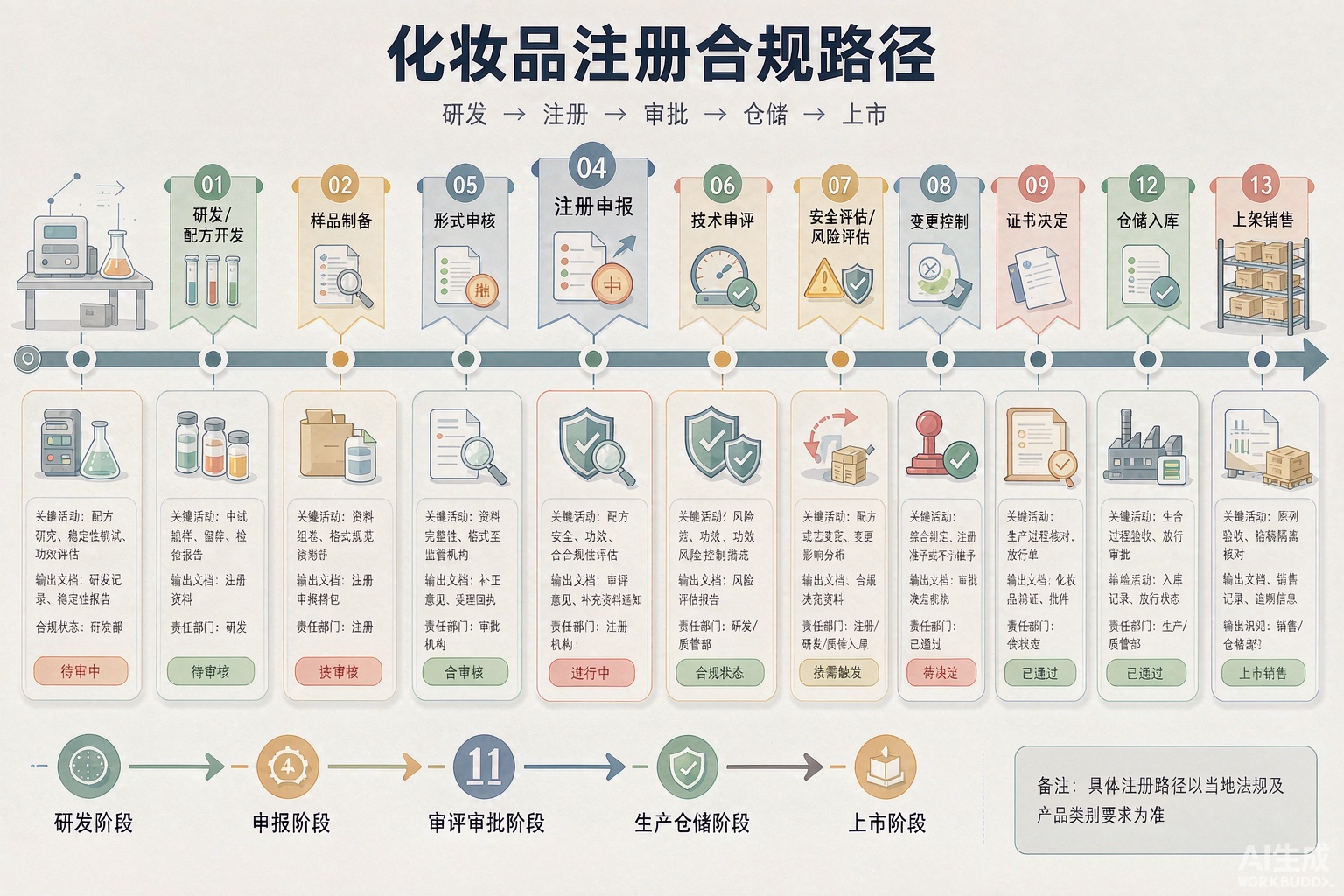
The CK cosmetic registration preceded the consumer launch. Regulatory assets appreciate; brand campaigns expire. Sequence registrations early.
Hundred-kilogram production of five saponins turned research into supply. Formulators and partners can only build on what's contractable.
The Xin'an closure was absorbed because the program outlived the brand. Structure the company so brand experiments are cheap and technology programs are protected.
The Li Jiaqi livestream launch used the market's strongest trust filter for a new brand. New actives need borrowed trust until their own repurchase data accumulates.
Ingredient-platform strategies fit companies with: one proven actives success, patient capital, proprietary chemistry, and multi-category ambitions. They do not fit trend-followers or single-product teams.
Every great beauty-health company eventually faces the second-ingredient question. Giant Biogene's rare-saponin decade is the most complete public case study of how to answer it — the results, through 2027, will be studied in every boardroom.
Explore more Eastern wellness wisdom at TCM Global.