← Back to TCM Global · All articles
2026-11-04
Herbal paste concentrate OEM production follows a five-stage chain — raw herb intake, extraction and decoction, vacuum concentration, blending with honey or excipients, and hot-fill packaging — and buyers who understand each stage can specify quality precisely, verify costs, and avoid the 10-20% quality failures common when pastes are bought on price alone. Paste concentrates (膏方, gaofang-style products, honey pastes, and syrup-like concentrates) are one of the fastest-growing ginseng categories, especially in winter gifting. This guide walks through the production process from a buyer's perspective so your next private-label project is specified, not improvised.
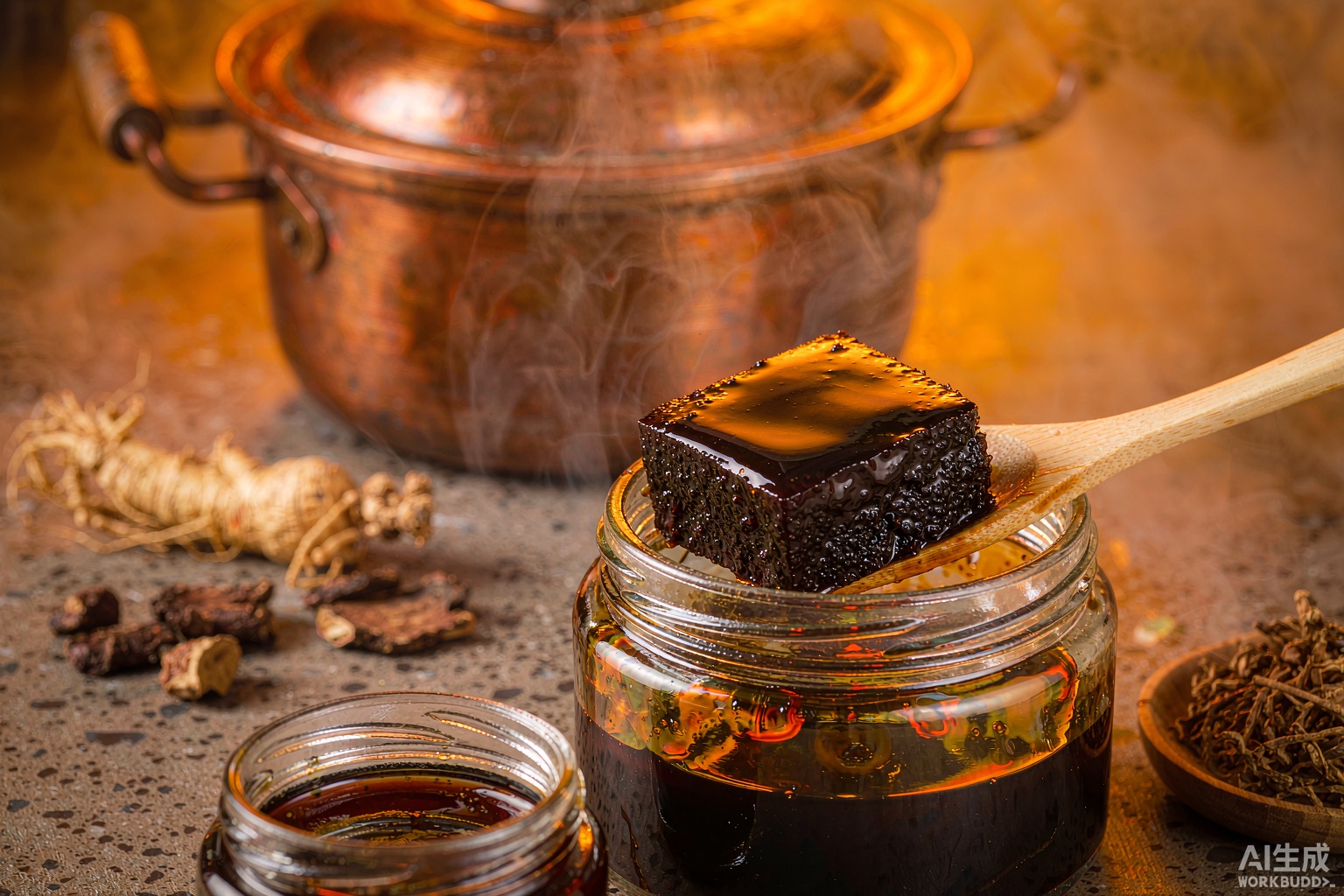
A herbal paste concentrate is a thick, spoonable product made by simmering herbal raw materials (ginseng, goji, jujube, poria, lily bulb, and similar TCM ingredients) in water for extended periods, then reducing the liquid under vacuum until it reaches a defined density, usually finished with honey, maltose, or syrup. Typical finished products include ginseng honey paste jars (150-500 g), stick packs (10-20 g), and gift-set presentations. Water activity is kept low enough (typically aw below 0.75-0.85) and sugar content high enough (40-65° Brix) to make the product shelf-stable without refrigeration for 18-24 months.
Herbs arrive with certificates of analysis and origin documentation. Manufacturers verify identity (macroscopic and sometimes DNA or HPLC fingerprint checks), pesticide residue, heavy metals, and moisture. Poor intake control is the single biggest root cause of failed finished-product tests downstream.
Herbs are soaked (typically 2-12 hours) then decocted in hot water for 1-3 hours, often in two or three successive extractions to maximize yield. Temperature, time, and herb-to-water ratios are the levers that determine how much active material transfers into the liquid.
The combined extract is concentrated under reduced pressure (roughly 60-80°C, far gentler than open boiling) until it reaches a target density or Brix level. Vacuum concentration protects heat-sensitive compounds and cuts concentration time by 30-50% versus atmospheric methods.
Concentrate is blended with honey (commonly 20-50% of formula), sugar syrup, or maltose, plus any final ingredients such as ginseng extract powder for standardizing ginsenoside content. The batch is heated briefly to 85-95°C to reduce microbial load before filling.
Paste is filled hot (typically 80-85°C) into sterilized glass jars or sachets, capped, inverted or held to sanitize the headspace, then cooled, labeled, and boxed. Batch coding and retention samples close the loop for traceability.
| Specification | Typical Range | Why It Matters |
|---|---|---|
| Brix (soluble solids) | 40-65° | Drives texture, preservation, and cost |
| Ginseng content | 5-20% of formula or standardized mg ginsenosides per 100 g | Core potency claim |
| Honey vs maltose base | Honey = premium; maltose = cost | Price and label positioning |
| Water activity (aw) | ≤0.75-0.85 | Shelf-stability without preservatives |
| Fill weight tolerance | ±3-5% | Net-content compliance |
| Shelf life | 18-24 months | Distribution planning |
Ask every candidate manufacturer for a recent third-party COA on a finished paste batch and review it with the criteria in our guide to reading a third-party lab report for ginseng. For gifting-specific formats and positioning, see ginseng honey paste wholesale and gift strategy.
Budget ranges for a private-label ginseng honey paste project:
Quotes far below these bands usually mean lower ginseng percentage, maltose instead of honey, or thinner consistency — all visible on a spec-sheet comparison rather than a taste test alone.
Three failure modes dominate: fermentation or mold (insufficient Brix or aw control, or contaminated hot-fill), thin or weeping texture (under-concentration, sometimes done to cut cost), and inconsistent potency (no standardization step). Mitigate each contractually: require batch COAs with Brix and ginsenoside values, a retained-sample clause, and a pre-shipment inspection right — our ginseng supplier audit checklist covers the essentials. Also plan shelf-life verification early; for expectations by market, review ginseng drink shelf life testing requirements, which apply analogously to pastes.
Buyers should also clarify whether the quoted price covers the decoction of raw herbs or only the blending of pre-extracted concentrates, because this single assumption can shift unit cost by 15-25% and change the minimum order quantity significantly. ## FAQ
Reduced-sugar versions exist but are technically harder: sugar is the main preservative system, so sugar-free pastes typically require hot-fill plus pasteurization, lower aw targets, and often refrigeration after opening, raising cost 20-40%.
Most manufacturers quote 1,000-3,000 jars for a fully custom formula. Stock formulas with private-label artwork can go as low as 500 jars, making them a good trial path.
A custom ginseng paste formula typically takes 2-4 weeks: 1-2 weeks for samples (often 2-3 iterations) plus 1-2 weeks for stability checks and final spec sign-off before mass production.