← Back to TCM Global · All articles
2026-11-04
Ginseng tea bags win on convenience, dosing consistency, and mass-retail scalability, while loose leaf ginseng tea wins on premium positioning, sensory experience, and per-unit price — most successful brands end up running both, with tea bags as the volume line and loose leaf as the margin line. For importers and private-label buyers, the choice between the two formats shapes your MOQ, packaging investment, target channel, and even freight costs. This comparison breaks down both OEM options so you can match the format to your market instead of guessing.
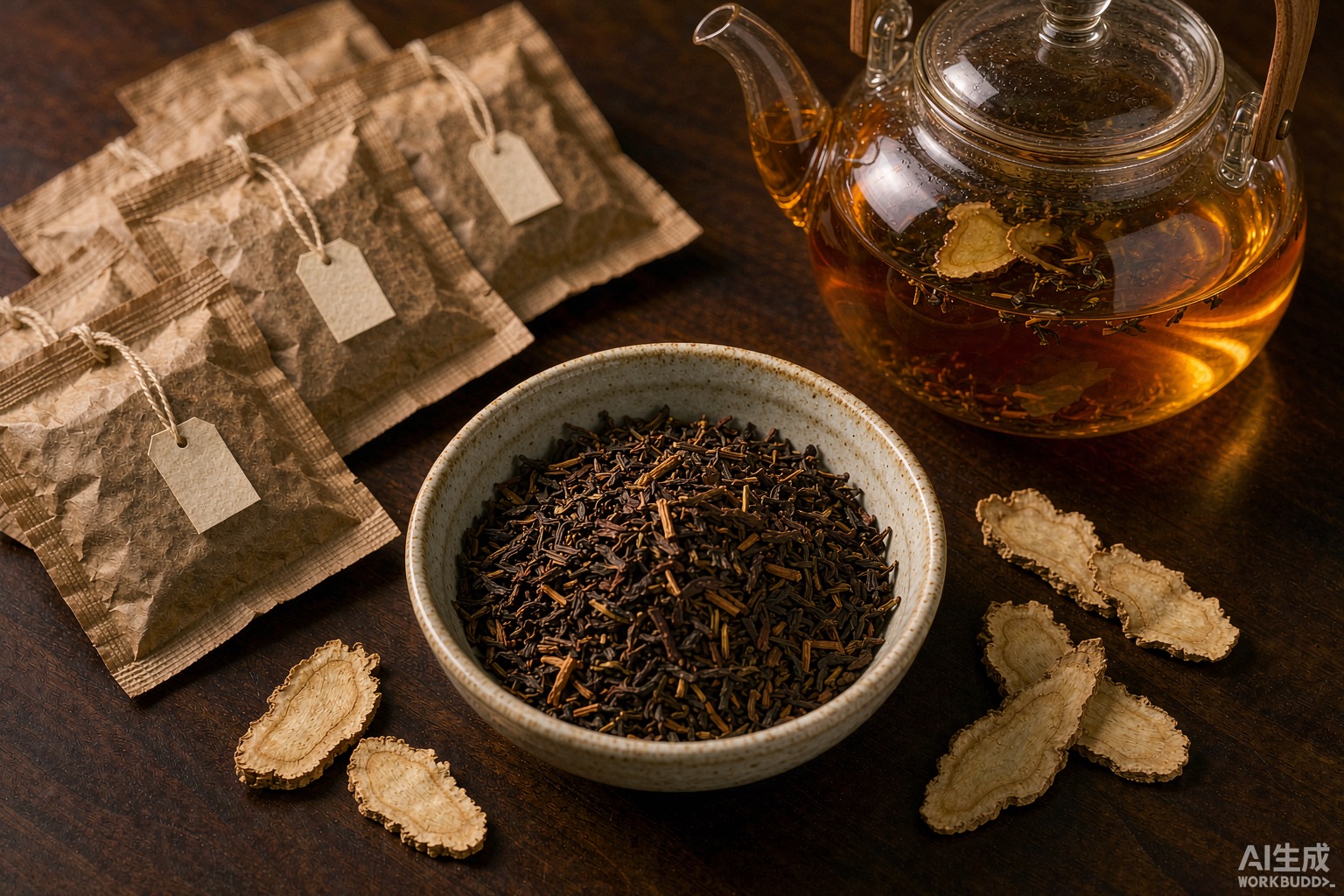
Tea bag ginseng products use cut, sliced, or granulated ginseng (often blended with other herbs such as jujube, goji, or chrysanthemum) sealed in filter paper, nylon mesh, or corn-fiber bags — usually 2-3 g per bag. Loose leaf products package whole or half-cut ginseng roots, root tails, or larger slices, often 5-10 g per serving, either alone or in visible blends.
The visible whole root is a significant selling cue in Asian-influenced markets: consumers read larger, well-shaped roots as a proxy for quality. Tea bags trade that visual signal for convenience and dosing accuracy — each bag delivers a consistent extract yield, which matters for functional positioning.
| Factor | Ginseng Tea Bags | Loose Leaf Ginseng Tea |
|---|---|---|
| Typical unit cost (FOB) | $0.05-0.15 per bag; $1.5-3.5 per 20-bag box | $2.0-6.0 per 50-100 g tin or pouch |
| Retail price potential | $4-10 per box (mass) | $10-30 per tin (premium) |
| Gross margin potential | 40-55% | 50-65% |
| MOQ (private label) | 3,000-10,000 boxes | 500-2,000 tins |
| Packaging tooling cost | $800-2,500 (box + bag printing) | $600-2,000 (tin molds if custom) |
| Freight density | High (light, compact) | Lower (tins are heavier/bulkier) |
| Shelf life | 18-24 months | 24-36 months |
Loose leaf commands higher per-unit prices and margins, but tea bags usually generate more total profit in volume channels because turnover is faster and price points clear supermarket thresholds. Tea bags also ship more efficiently: a 40-foot container can carry roughly 30-50% more boxed tea-bag product than tin-packed loose leaf by retail value.
Tea bags are the default for supermarkets, pharmacies, convenience stores, e-commerce multipacks, and office pantry programs — anywhere convenience and repeat purchase drive the category. Loose leaf dominates premium gifting, Asian grocery specialty, hotel tea programs, and spa retail, where the ritual of brewing visible roots is part of the product's value. If your strategy includes hospitality channels, see our guide to white-label ginseng for hotel mini bars, which pairs naturally with loose-leaf tins.
Key parameters to lock in your specification sheet:
For granulated instant formats that sit between tea bags and extracts, see ginseng instant tea granules OEM.
Loose leaf quality lives in root selection and presentation:
Choose tea bags if your primary channels are mass retail or e-commerce, your price target is under $10 per unit, and you want faster repeat purchase. Choose loose leaf if you target premium retail, gifting, or hospitality, can support $12-30 price points, and your brand story emphasizes origin and tradition. Choose both if your catalog can support a good-better-good structure: a $6-8 tea bag box as entry, a $12-15 granule or blend line as mid-tier, and a $20+ loose-leaf tin as flagship. Buyers building tiered assortments for the current season should also review the winter ginseng tonic season retail stocking guide to align formats with Q4 demand.
Often yes, but they are different production lines. Tea bag producers need cutting, blending, and bagging equipment; loose leaf needs sorting and grading capability. Confirm which processes are in-house versus outsourced before committing to a dual-format program.
Tea bags: 20-30 days after artwork approval for standard MOQs. Loose leaf tins: 25-40 days if custom tin molds are required; 15-20 days if using stock tins with label or sleeve customization.
Not necessarily. Cut and granulated material can extract comparably to slices in hot water, and dosing per bag is actually more consistent. What matters is the ginsenoside specification per serving, which should be verified on the COA for either format.