← Back to TCM Global · All articles
2026-11-04
Lidong, the start of winter in the East Asian calendar (November 7, 2026), opens the single strongest seasonal demand window for ginseng products, and B2B buyers should complete stocking 6-10 weeks before the peak to secure production capacity and avoid 8-15% rush surcharges. Across China, Korea, and overseas Chinese communities, winter is traditionally the time for nourishing tonics, and industry reports consistently show ginseng sales in Q4 running 30-50% above the quarterly average. Distributors who treat Lidong as a planning anchor — not just a cultural note — capture the season with better margins and fuller shelves. This guide explains the demand pattern, the formats that move fastest, and a concrete stocking timeline you can apply to your next purchase order.
Lidong (立冬, "start of winter") is one of the 24 solar terms in the traditional East Asian calendar. In TCM tradition, winter is the season for storing energy and nourishing the body, which makes warming, tonifying herbs like ginseng the default recommendation. Retail behavior follows the calendar: pharmacy chains in China and Southeast Asia typically launch winter tonic promotions in the first week of November, and e-commerce platforms front-load ginseng SKUs from late October.
For B2B buyers the practical implication is timing. Consumer demand concentrates between early November and Chinese New Year (Feb 17, 2027), a window of roughly 14 weeks. If your goods land after mid-December, you lose the highest-velocity weeks. Working backward from a mid-December shelf-ready date, and allowing 30-45 days of ocean freight plus 10-15 days of production, your order should be confirmed by late October or early November — right at Lidong.
Not all formats are equal in the tonic season. Winter buyers lean toward warming, shareable, and giftable products rather than grab-and-go energy formats.
| Format | Winter Demand Profile | Typical MOQ | Lead Time | Best Fit |
|---|---|---|---|---|
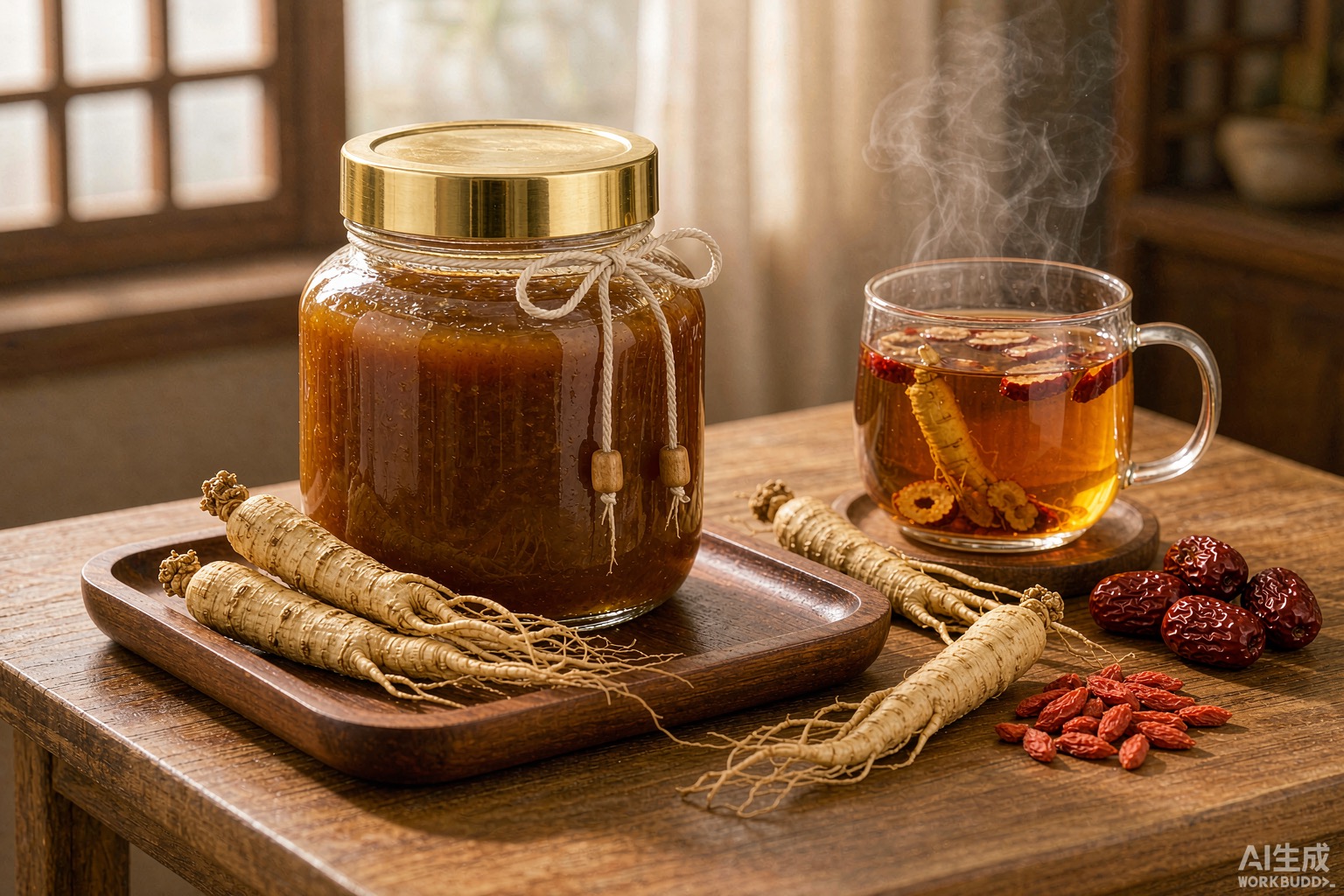
| Ginseng honey paste (jars) | Very high — classic tonic, giftable | 300-500 jars | 20-30 days | Pharmacies, gift retail |
| Tea gift tins / tea bags | High — daily ritual use | 500-1,000 units | 15-25 days | Supermarkets, e-commerce |
| Jelly sticks (family packs) | High — convenient daily dose | 3,000-5,000 sticks | 25-35 days | Family wellness retail |
| Instant tea granules | Medium-high — office and travel | 500 boxes | 15-20 days | Office, pharmacy chains |
| RTD energy drinks | Lower in winter — peak in summer | 10,000+ bottles | 30-45 days | Convenience channels |
Honey pastes and tea tins also carry the highest perceived gift value, which matters because an estimated 40-60% of winter ginseng purchases in East Asian markets are gift-driven. For format-level detail on pastes, see our guide to ginseng honey paste wholesale and gift positioning, and for family-oriented formats see ginseng jelly sticks for family wellness.
A practical Lidong-cycle plan looks like this:
Buyers who miss the first window should still order for the CNY tail rather than waiting for next year: the season has two peaks, and the second one (mid-January onward) often matches the first in gift categories.
A common rule for seasonal health products is to cover 80-90% of expected seasonal volume in the first order and hold 10-20% as a fast-turnaround replenishment. Overstocking ginseng is less risky than many perishables — properly stored dried roots and sealed pastes carry 18-36 month shelf lives — but capital tied up in slow SKUs still hurts. Prioritize depth on 3-5 proven SKUs over breadth of untested ones, and use the winter ginseng tonic season retail stocking checklist to align your assortment with channel expectations.
Position products around three proven winter themes: daily nourishment rituals (morning tea or a spoon of paste), warming comfort in cold months, and year-end gifting. Avoid any disease-prevention or treatment language — keep claims to traditional-use and general wellness framing, which also keeps customs and advertising compliance simpler in most markets. Retailers who bundle a tea tin with a paste jar typically see 15-25% higher basket values during the season.
Confirm OEM orders by late September to early October at the latest. Allowing 20-35 days of production and 30-45 days of shipping, a Lidong-anchored order placed in early October lands in time for the December gift peak.
A ginseng honey paste jar or a tea gift tin. Both have strong seasonal gift positioning, moderate MOQs (300-1,000 units), and broad channel acceptance from pharmacies to supermarkets.
No. Winter tonic positioning also resonates in Southeast Asia, the Middle East, and among diaspora communities in Europe and North America, though the peak is narrower — plan 60-70% of the volume that East Asian channels absorb.